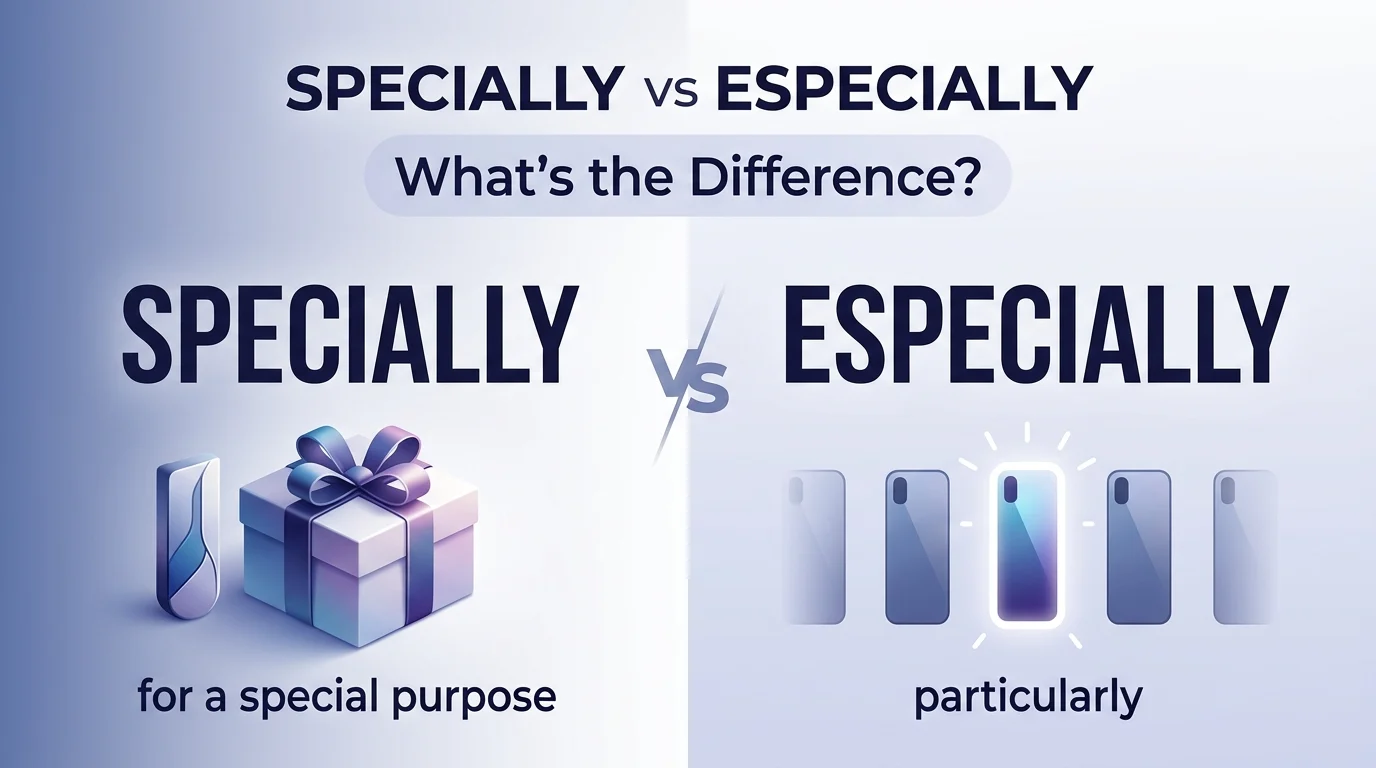
Specially and especially look almost the same. But they do not always mean the same thing. Especially usually means “particularly” or “more than others.” Specially usually means “for a special purpose” or “for a certain person or use.”
For example: ‘I especially like tea’, shows a strong preference’, and ‘This cup was specially made for me,’ shows a special purpose.
Quick Comparison
| Point | Specially | Especially |
| Main meaning | For a special purpose | Particularly |
| Main use | Shows purpose | Shows emphasis |
| Common pattern | specially made | especially good |
| Example | specially designed for kids | especially useful for kids |
| Easy meaning | For a specific reason | More than others |
What Does Specially Mean?
Specially means for a special or specific purpose.
It often tells us why something was made, changed, or done.
Examples:
- This bag was specially made for travel.
- The room was specially designed for children.
- She came specially to see me.
- The cake was specially made for his birthday.
A simple way to understand specially is:
Specially = for a special purpose
What Does Especially Mean?
Especially means particularly or more than others.
It helps us give extra attention to one person, thing, or quality.
Examples:
- I like fruit, especially mangoes.
- This book is especially useful for students.
- She is especially good at English.
- I like all sports, especially football.
A simple way to understand especially is:
Especially = particularly
Core Difference Between Specially and Especially
The easiest way to remember the difference between specially and especially is:
Specially → purpose
Especially → emphasis
Look at these examples:
The shoes were specially made for hiking.
The shoes were made for a special purpose.
I like these shoes especially because they are comfortable.
Here, especially adds emphasis to the reason.
Specially vs Especially Examples
| Example | Why? |
| The dress was specially made for her. | It was made for a specific person. |
| I especially like this dress. | It shows a strong preference. |
| The school was specially designed for young children. | It was designed for a special purpose. |
| This lesson is especially useful. | It gives extra emphasis to “useful.” |
| The food was specially prepared for the guests. | It was prepared for a specific group. |
| I enjoy many fruits, especially apples. | Apples are given special attention. |
When to Use Specially
Use specially when you can replace it with:
“for a special purpose”
For example:
This computer was specially designed for artists.
It means:
This computer was designed for a special purpose.
More examples:
- The shoes were specially made for running.
- This program was specially developed for teachers.
- The room was specially prepared for the meeting.
- He came specially to help us.
Words such as made, designed, prepared, developed, and built often appear with specially.
When to Use Especially
Use especially when you mean:
“particularly” or “more than others.”
For example:
I love summer, especially July.
This means:
I love summer, particularly July.
More examples:
- She likes animals, especially cats.
- This rule is especially important.
- The test was especially difficult.
- I enjoy reading, especially history books.
Specially and Especially Can Sometimes Overlap
There are some cases where both words can be used.
For example:
I bought this especially for you.
You can also say:
I bought this specially for you.
Both can show that the item was intended for that person. The exact choice can depend on the meaning and style of the sentence. Cambridge Dictionary: Especially or specially?
So, do not treat the difference as an absolute rule in every sentence.
Common Mistake
A common mistake is using specially when you mean particularly.
For example:
I like all sports, specially football.
For standard English, it is better to write:
I like all sports, especially football.
Why? Because football is being picked out from a group of sports.
Another common pattern is:
specially designed
For example:
This chair was specially designed for children.
Here, specially is correct because the chair was designed for a specific purpose.
A Simple Memory Trick
Use this easy rule:
Especially = Emphasis
If you want to give extra attention to something, use especially.
I like all fruits, especially oranges.
Specially = Special Purpose
If something was made or done for a certain purpose, use specially.
This tool was specially made for farmers.
Think:
Especially → Which one stands out?
Specially → What special purpose?
FAQs
What is the difference between specially and especially?
Especially usually means “particularly” or “more than others.” Specially usually means “for a special purpose” or “for a specific person.” For example, “I especially like apples” shows a preference. “The box was specially made for apples” shows a specific purpose.
Is “specially designed” correct?
Yes. Specially designed is correct when something was designed for a particular purpose or group. For example, “These shoes were specially designed for runners.” The word specially tells us that the design had a specific purpose.
Source: Cambridge Dictionary: Specially
Is “especially good” correct?
Yes. Especially good is a common and correct phrase. Here, especially means “particularly.” For example, “She is especially good at math” means that she is particularly good at math.
Can I say “especially for you”?
Yes. Especially for you is correct. It can mean that something is meant for that person in particular. Specially for you can also be used when the idea is that something was done specifically for that person.
Source: Cambridge Dictionary: Especially or specially?
Which is correct: “especially football” or “specially football”?
Use especially football when you are talking about one thing you like more than other things. For example, “I enjoy many sports, especially football.” Here, especially means “particularly.”
Is specially an informal word?
Not always. Specially is a normal English adverb. It is often used when something is made, designed, prepared, or done for a particular purpose. In some cases, especially in British English, it can overlap with especially.
Source: Oxford Learner’s Dictionaries: Specially
Conclusion
The main difference between specially and especially is simple. Especially usually means “particularly” and adds emphasis. Specially usually means “for a special purpose.” Use especially when you pick one thing from a group or give extra importance to something. Use specially when something is made, designed, prepared, or done for a specific reason. The easiest memory trick is “especially = emphasis” and “specially = special purpose.”

Hi! I am Arshad Ullah presently working as linguist in Punjab Education Department. I have done MA in English Literature while M.Phil in Applied Linguistics. I have taught creative writing to the post graduation classes for 15 years. Presently I am working as content writer, and offering classes for blog writing. On this site, I research each topic from authoritative sources and edit every comparison for accuracy and clear, simple language.