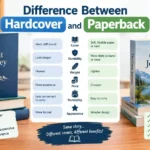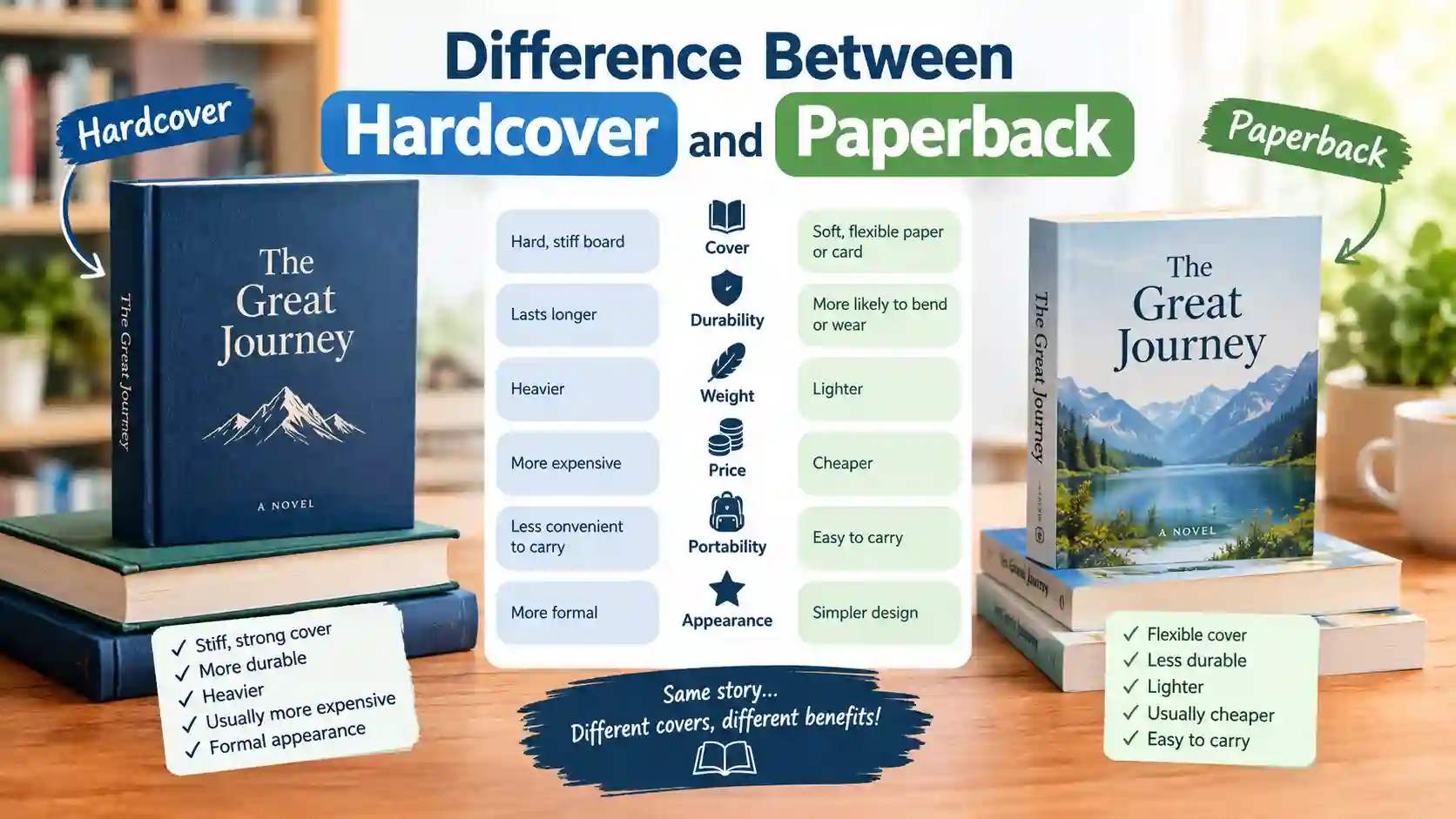
The main difference between hardcover and paperback books is the type of cover. A hardcover book has a stiff, strong cover made from thick board, while a paperback book has a soft, flexible cover made from thick paper or thin card. Hardcovers usually offer more protection and last longer, while paperbacks are lighter, easier to carry, and often less expensive.
Quick Comparison Table
| Feature | Hardcover | Paperback |
| Cover | Hard, stiff board | Soft, flexible paper or card |
| Durability | Usually lasts longer | More likely to bend or wear |
| Weight | Heavier | Lighter |
| Price | Usually more expensive | Usually cheaper |
| Portability | Less convenient to carry | Easy to carry |
| Appearance | Often looks more formal | Usually simpler |
| Shelf life | Better cover protection | Cover may wear out sooner |
| Best for | Collecting and long-term use | Everyday reading and travel |
Introduction
When you buy a book, you may see two versions of the same title: hardcover and paperback. Both contain the same story or information, but they differ in how the book is made.
These differences affect the book’s price, weight, appearance, and durability. Knowing them can help you choose the right version for your needs.
What Is a Hardcover Book?
A hardcover book, also called a hardback, has a firm cover made from thick board covered with paper, cloth, or another material. Its pages are usually sewn or glued together and attached to the cover.
Main Characteristics of Hardcover Books
- Strong cover: The stiff cover helps protect the pages.
- Long-lasting design: It is often a good choice for books you want to keep for many years.
- Formal appearance: Hardcovers are common for gift books, special editions, and library collections.
- Higher price: They usually cost more to produce and buy.
- Greater weight: Their thick covers make them less convenient to carry around.
Some hardcover books also come with a removable paper cover called a dust jacket. It can display the title, author, and artwork while protecting the cover underneath.
What Is a Paperback Book?
A paperback book has a flexible cover made from thick paper or thin card. The pages are commonly held together with glue along the spine.
Paperbacks are popular because they are light, easy to carry, and often affordable. They are common for novels, study guides, travel books, and everyday reading.
Main Characteristics of Paperback Books
- Flexible cover: The cover bends more easily than a hardcover.
- Lightweight design: It fits easily into a bag.
- Lower price: It is often more affordable.
- Easy handling: It is comfortable to hold while travelling or reading on the go.
- Less cover protection: The cover can crease, bend, or tear more easily.
Paperbacks are not all the same. Some have thick, high-quality covers, and careful handling can help them last for many years.
Core Difference Between Hardcover and Paperback
1. Cover Strength and Durability
A hardcover has a rigid outer shell. It helps protect the pages from bumps, pressure, and everyday wear. This makes it useful for books that are read often or stored for a long time.
The Library of Congress explains that hard binding provides strong protection for materials kept in library collections. However, the quality of the paper, glue, and binding also affects how long a book lasts.
A paperback has a softer cover. It can bend or develop creases if you carry it in a crowded bag. Still, a well-made paperback can last for years if you handle it with care.
2. Price and Value
Hardcover editions usually cost more than paperback editions of the same title. Their covers often use more material and may require a more involved binding process.
Paperbacks are often the budget-friendly choice. Publishers may release a paperback edition after a hardcover edition, although the release order varies by book.
Example: If both editions contain the same novel, a paperback may be the better choice when you mainly want to read the story at a lower cost.
3. Weight and Portability
A hardcover is usually heavier because of its stiff cover. It may feel less comfortable to carry during a long commute.
A paperback is lighter and often easier to fit into a backpack, handbag, or travel bag.
- Choose a hardcover for your home library or desk.
- Choose a paperback for buses, trains, flights, or daily reading.
4. Appearance and Presentation
Hardcover books often look more formal. Some have cloth covers, decorative details, or a removable dust jacket. These features can make them attractive gifts or display pieces.
Paperbacks tend to have a simpler, more flexible design. Their covers can still feature beautiful artwork, bright colors, and high-quality printing.
Important: A book’s appearance depends on its design and materials, not only on its binding type.
5. Reading Comfort
Neither format is always more comfortable. The best choice depends on the book’s size, weight, and how you like to read.
- A paperback may be easier to hold with one hand.
- A large hardcover may be tiring to hold for long periods.
- A hardcover can be convenient when you read at a table.
- A paperback may be easier to carry and read while travelling.
6. Storage and Long-Term Use
Hardcovers are often better at protecting books on shelves because their covers resist bending. They are a useful option for reference books, favorite novels, and books you want to keep for many years.
Paperbacks take up less weight in a bag, but their covers and spines may show wear sooner. If you want to preserve a paperback, keep it dry, avoid folding the cover backward, and store it away from direct sunlight.
A hardcover does not guarantee that a book will last forever. Paper quality, glue, stitching, moisture, and storage conditions also matter.
Similarities Between Hardcover and Paperback
Although their covers differ, both formats share several features.
- Same purpose: Both are designed to present written information or stories.
- Same content: Different formats of the same edition usually contain the same main text, but special editions may include extra material.
- Same types of books: Both can be used for novels, textbooks, biographies, and nonfiction.
- Different editions: Publishers may offer the same title in more than one format.
- Different ISBNs: A hardcover and paperback version normally have separate ISBNs, which help identify each edition or format. The Library of Congress explains this distinction in its publishing guidance.
When to Choose Hardcover or Paperback
Choose Hardcover When:
- You want a book to keep for many years.
- You prefer a firm cover and a formal appearance.
- You are buying a gift.
- You often use a book at home or at a desk.
- You want a physical book with stronger cover protection.
Choose Paperback When:
- You want to spend less.
- You travel or commute with your books.
- You prefer a lighter book.
- You want a convenient everyday reading copy.
- You need to carry several books in one bag.
Common Misconceptions About Hardcover and Paperback
Misconception 1: Hardcover Books Always Last Longer
Hardcovers usually offer better protection against physical wear, but they are not automatically more durable in every way. Poor-quality paper or weak binding can still lead to damage. A well-made paperback can also last for many years.
Misconception 2: Paperback Books Have Lower-Quality Content
The cover type does not tell you whether the writing is good. A paperback and a hardcover may contain the same text. Differences in content usually depend on the edition, not simply on the cover.
Misconception 3: Every Book Comes in Both Formats
Not every title is available in hardcover and paperback. Some publishers release a book in only one format. Others offer several versions, including special editions.
Misconception 4: Hardcover and Paperback Mean Different Book Sizes
These terms describe the cover and binding, not a fixed size. A hardcover may be small or large, and a paperback can also come in different sizes.
FAQs
1. Is hardcover better than paperback?
Hardcover is usually better if you want stronger cover protection, a formal appearance, or a book to keep for years. Paperback is often better if you want a lighter and less expensive copy. Neither is always better. Your choice depends on your budget, reading habits, and how you plan to use the book.
2. Why is paperback cheaper than hardcover?
Paperback books usually have flexible covers made from paper or thin card. Hardcover books use stiff boards and may have additional cover materials. These production differences often make hardcovers more expensive, although the actual price depends on the publisher, edition, and seller.
3. Does a hardcover book have more pages than a paperback?
Not necessarily. If both versions contain the same text, they may have a similar number of pages. However, page size, font size, spacing, and added content can change the total. Always check the edition details if page count matters to you.
4. What is the difference between paperback and softcover?
The terms usually mean the same thing: a book with a flexible cover rather than a rigid board cover. Paperback is the more common term in book listings. You may also see the term softback.
5. Which is better for students, hardcover or paperback?
Paperback is often a practical choice for students because it is lighter and usually costs less. However, a hardcover textbook may be useful if it will be used frequently over several years. Consider the book’s weight, price, binding quality, and how often you need to carry it.
6. Is a hardcover book the same as a hardback?
Yes. Hardcover and hardback are two names for a book with a rigid cover. The terms describe the same general format, though publishers may use one term more often than the other.
7. Do hardcover and paperback editions have different ISBNs?
Yes, they normally have separate ISBNs because they are different published formats. If you are ordering a particular edition, check the ISBN along with the title and author to avoid buying the wrong version. The Library of Congress provides guidance on ISBNs for different book formats.
Library of Congress
Conclusion
The difference between hardcover and paperback comes down mainly to the cover, durability, weight, price, and ease of carrying. A hardcover has a stiff cover that offers better physical protection and often gives the book a more formal look. A paperback has a flexible cover that makes it lighter, easier to carry, and usually less expensive.
Choose hardcover if you want a sturdy book for your collection or long-term use. Choose paperback if you want an affordable copy for everyday reading or travel. Before buying, also check the edition, page count, and content to make sure you get the version you need.

Hi! I am Arshad Ullah presently working as linguist in Punjab Education Department. I have done MA in English Literature while M.Phil in Applied Linguistics. I have taught creative writing to the post graduation classes for 15 years. Presently I am working as content writer, and offering classes for blog writing. On this site, I research each topic from authoritative sources and edit every comparison for accuracy and clear, simple language.