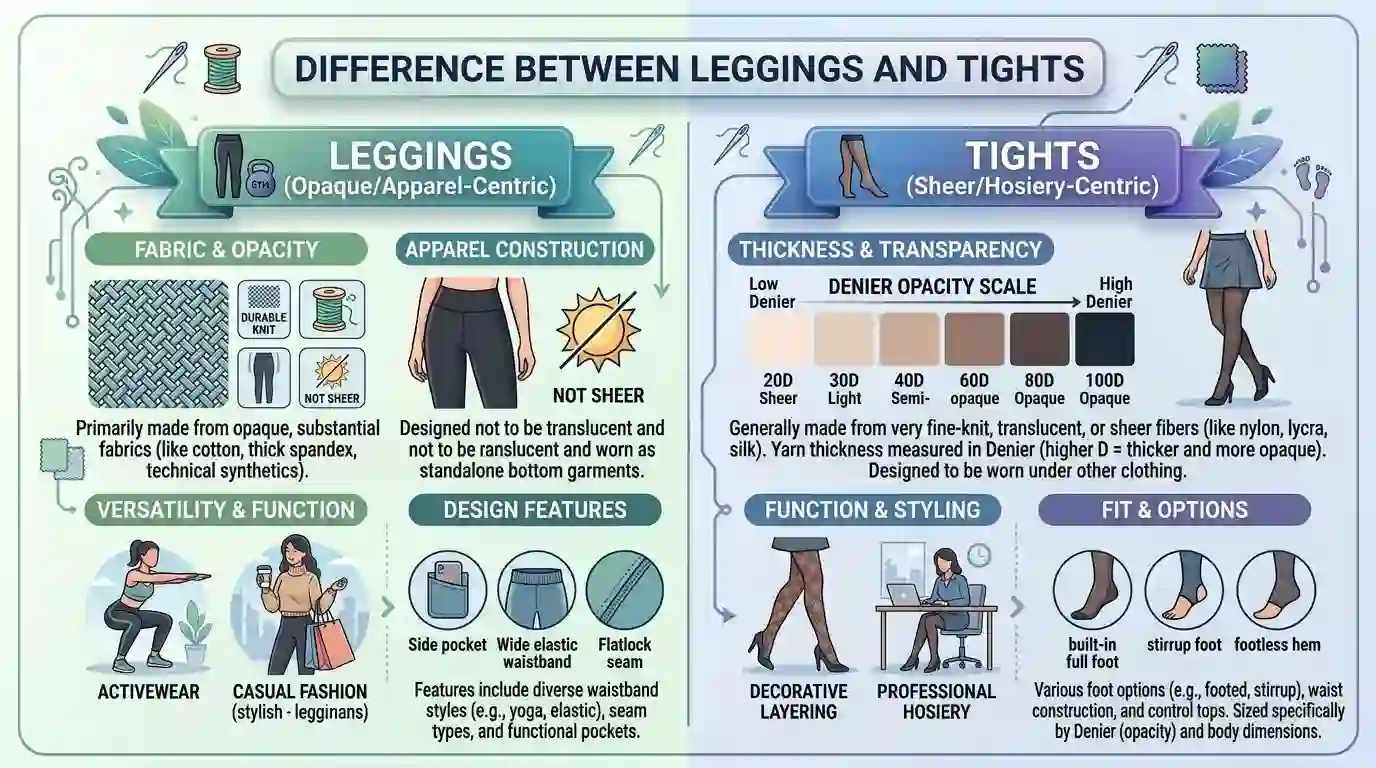
I still remember standing in a clothing store, looking at a rack filled with leggings and tights, wondering if they were basically the same thing. They looked similar at first glance. Both were stretchy. Both fit close to the skin. Both were worn on the legs.
But after buying the wrong pair for an event, I quickly learned they are not the same.
Many people compare leggings and tights because they appear similar. The confusion becomes even greater when shopping online, where pictures can make them look identical. Choosing the wrong option can lead to discomfort, transparency issues, or an outfit that simply doesn’t work as expected.
Understanding the difference between leggings and tights helps you make better fashion choices, save money, and feel more comfortable in everyday life.
This guide explains everything in simple English with practical examples so you can clearly understand the real difference.
What Are Leggings?
Leggings are close-fitting stretch pants that cover the legs from the waist down to the ankles.
Unlike tights, leggings are usually made from thicker materials such as cotton, polyester, spandex, or performance fabrics. Because the fabric is thicker, leggings can often be worn on their own without needing additional clothing over them.
Purpose of Leggings
Leggings are designed for:
- Casual wear
- Exercise and fitness
- Travel
- Lounging at home
- Everyday comfort
Who Uses Leggings?
Leggings are popular among:
- Women
- Men (certain styles)
- Athletes
- Students
- Busy professionals
- Travelers
Real-World Example
If you’re going to the gym, running errands, or working from home, leggings are often the preferred choice because they provide comfort and flexibility.
Many people first assume leggings are simply thick tights, but they are actually designed more like pants.
What Are Tights?
Tights are thin, stretchy garments that cover the legs and feet.
They are usually made from nylon, microfiber, silk blends, or other lightweight materials. Most tights are semi-transparent or sheer, although opaque versions also exist.
Unlike leggings, tights are generally worn under skirts, dresses, or shorts rather than as standalone bottoms.
Purpose of Tights
Tights are commonly used for:
- Fashion styling
- Formal outfits
- Professional attire
- Warmth during cold weather
- Dance and performance activities
Who Uses Tights?
Tights are commonly worn by:
- Office workers
- Students
- Dancers
- Fashion enthusiasts
- Professionals attending formal events
Real-World Example
A person wearing a dress in winter may choose tights for added warmth and style without changing the overall look of the outfit.
One small difference most people overlook is that tights typically include foot coverage, while leggings usually stop at the ankle.
Quick Comparison Table
| Feature | Leggings | Tights |
| Meaning | Stretchy pants | Thin leg covering |
| Main Purpose | Comfort and casual wear | Fashion and layering |
| Thickness | Thick | Thin |
| Transparency | Usually opaque | Often sheer |
| Foot Coverage | Usually no | Usually yes |
| Durability | Higher | Lower |
| Comfort | Very comfortable | Comfortable but delicate |
| Exercise Use | Excellent | Limited |
| Formal Wear | Sometimes | Common |
| Maintenance | Easy | Requires care |
| Popularity | Everyday wear | Fashion wear |
| Best Use Case | Casual and active use | Dresses and skirts |
| Main Advantage | Can be worn alone | Stylish appearance |
| Main Drawback | Not always formal | Tears easily |
Biggest Difference
The biggest difference between leggings and tights is that leggings are designed to be worn as pants, while tights are designed to be worn underneath other clothing.
This matters more than many beginners realize.
If you wear thin tights as standalone pants, they may become transparent. On the other hand, wearing thick leggings under a formal dress may create a bulky appearance.
Understanding this core difference helps you choose the right garment for the right situation.
Key Differences Explained
1. Fabric Thickness
Leggings
Leggings use thicker materials that provide more coverage.
Tights
Tights use thinner materials that may be sheer or semi-transparent.
Real-World Impact
Thicker fabric offers more confidence when worn alone.
2. Transparency
Leggings
Usually fully opaque.
Tights
Can range from sheer to opaque.
Real-World Impact
Transparency affects where and how the garment can be worn.
3. Foot Coverage
Leggings
Normally end at the ankle.
Tights
Usually extend over the feet.
Real-World Impact
Tights create a smoother look under dresses and skirts.
4. Intended Use
Leggings
Made for daily activities and movement.
Tights
Made for layering and styling.
Real-World Impact
Purpose affects comfort and practicality.
5. Durability
Leggings
Generally resistant to wear and tear.
Tights
Can snag or rip easily.
Real-World Impact
Some users later regret buying inexpensive tights because they need frequent replacement.
6. Athletic Performance
Leggings
Excellent for sports and workouts.
Tights
Not ideal for intense physical activity.
Real-World Impact
Athletes typically choose leggings for better support.
7. Style Flexibility
Leggings
Work well with oversized shirts, hoodies, and casual outfits.
Tights
Pair best with skirts, dresses, and formal wear.
Real-World Impact
Outfit choices often determine which option is better.
8. Warmth
Leggings
Generally provide greater insulation.
Tights
Provide light to moderate warmth.
Real-World Impact
Cold-weather users often prefer leggings.
9. Comfort During Long Wear
Leggings
Remain comfortable throughout the day.
Tights
Can feel restrictive after many hours.
Real-World Impact
For everyday use, leggings are often preferred.
10. Price
Leggings
Usually cost more upfront.
Tights
Often cheaper per pair.
Real-World Impact
Over the long term, leggings may provide better value because they last longer.
11. Fashion Purpose
Leggings
Focus on comfort and function.
Tights
Focus on style and appearance.
Real-World Impact
Fashion goals influence the better choice.
Similarities Between Them
Despite their differences, leggings and tights share several similarities.
- Both fit closely to the body
- Both use stretch fabrics
- Both provide warmth
- Both come in many colors
- Both are popular fashion items
- Both improve outfit versatility
These similarities are why people often confuse them.
Pros and Cons
Pros of Leggings
- Comfortable for long wear
- Durable
- Good for exercise
- Can be worn alone
- Suitable for travel
Cons of Leggings
- Not always formal
- Some styles lose shape over time
- Quality varies greatly
Pros of Tights
- Elegant appearance
- Great for layering
- Suitable for professional outfits
- Lightweight
- Available in many designs
Cons of Tights
- Tear easily
- Less durable
- Usually cannot be worn alone
- Require careful handling
Which Is Better for Different Situations?
For Beginners
Leggings are usually easier to wear and style.
For Work
Tights often work better with professional dresses and skirts.
For Fitness
Leggings are the clear winner.
For Budget Shoppers
The cheaper option depends on usage. Tights may cost less initially, but leggings often last longer.
For Travel
Leggings provide better comfort and versatility.
For Cold Weather
Leggings generally offer more warmth.
For Fashion Events
Tights often create a more polished appearance.
For Everyday Wear
Most people prefer leggings because of comfort and convenience.
Common Mistakes People Make
Assuming They Are the Same
This is the most common misunderstanding.
Buying Based Only on Appearance
Products may look similar online but feel very different in real use.
Ignoring Fabric Thickness
Thickness affects comfort, warmth, and transparency.
Choosing Based on Trends
Fashion trends change quickly. Practical needs matter more.
Overlooking Durability
Many buyers focus only on price instead of lifespan.
Wearing Tights as Pants
This can create unwanted transparency issues.
Expert Recommendation
Choose Leggings If:
- You want everyday comfort
- You exercise regularly
- You travel often
- You need durable clothing
- You prefer casual outfits
Choose Tights If:
- You wear dresses frequently
- You need formal styling
- You want a sleek appearance
- You need lightweight layering
- You attend professional events
Avoid Leggings If:
- You need a highly formal look
- Dress codes require traditional business attire
Avoid Tights If:
- You need workout clothing
- You want maximum durability
- You prefer wearing them without additional layers
Final Verdict
When comparing leggings and tights, neither option is universally better. The right choice depends on how you plan to wear them.
Leggings are built for comfort, movement, and everyday practicality. They work well for exercise, travel, errands, and casual outfits. Their thicker fabric makes them durable and easy to wear on their own.
Tights, on the other hand, are designed for fashion, layering, and creating a polished look. They pair beautifully with dresses and skirts and often work better in formal settings.
After using both for some time, many people find that leggings become their everyday favorite, while tights remain a valuable wardrobe item for specific occasions. Understanding their strengths and limitations makes shopping easier and helps you choose confidently based on comfort, style, and purpose.
FAQs
What is the main difference between leggings and tights?
The main difference is that leggings are designed to be worn as pants, while tights are typically worn underneath skirts, dresses, or shorts. Leggings are thicker and more durable.
Which is better, leggings or tights?
Neither is universally better. Leggings are better for casual wear and exercise, while tights are better for formal outfits and fashion layering.
Are leggings and tights interchangeable?
Not completely. Although they look similar, they serve different purposes and are made with different fabric thicknesses.
Which lasts longer, leggings or tights?
Leggings usually last much longer because they are made from thicker and stronger materials that resist tearing.
Are tights warmer than leggings?
In most cases, leggings provide more warmth because of their thicker fabric. Thermal tights can be an exception.
Which is best for beginners?
Leggings are generally best for beginners because they are easy to style, comfortable, and versatile.
Why do people wear tights under dresses?
Tights provide warmth, improve outfit appearance, and offer extra coverage while maintaining a polished style.
What mistake should beginners avoid?
A common mistake is assuming all tights are opaque enough to wear alone. Checking fabric thickness before purchasing is important.
Conclusion
The difference between leggings and tights goes far beyond appearance. While both are stretchy garments designed to fit closely to the body, they serve different purposes. Leggings are thicker, more durable, and suitable for everyday wear, workouts, and casual outfits. Tights are thinner, often include foot coverage, and are primarily used for layering under dresses and skirts.
Many people become confused because both garments look similar at first glance. However, understanding factors such as fabric thickness, transparency, durability, comfort, and intended use makes choosing much easier. For daily comfort and flexibility, leggings are usually the better option. For elegance, professional styling, and formal fashion, tights often work best.
The smartest choice depends on your lifestyle, wardrobe needs, and personal comfort preferences. Knowing the strengths of each helps you avoid common mistakes and make more confident buying decisions.

Hi! I am Arshad Ullah presently working as linguist in Punjab Education Department. I have done MA in English Literature while M.Phil in Applied Linguistics. I have taught creative writing to the post graduation classes for 15 years. Presently I am working as content writer, and offering classes for blog writing. On this site, I research each topic from authoritative sources and edit every comparison for accuracy and clear, simple language.