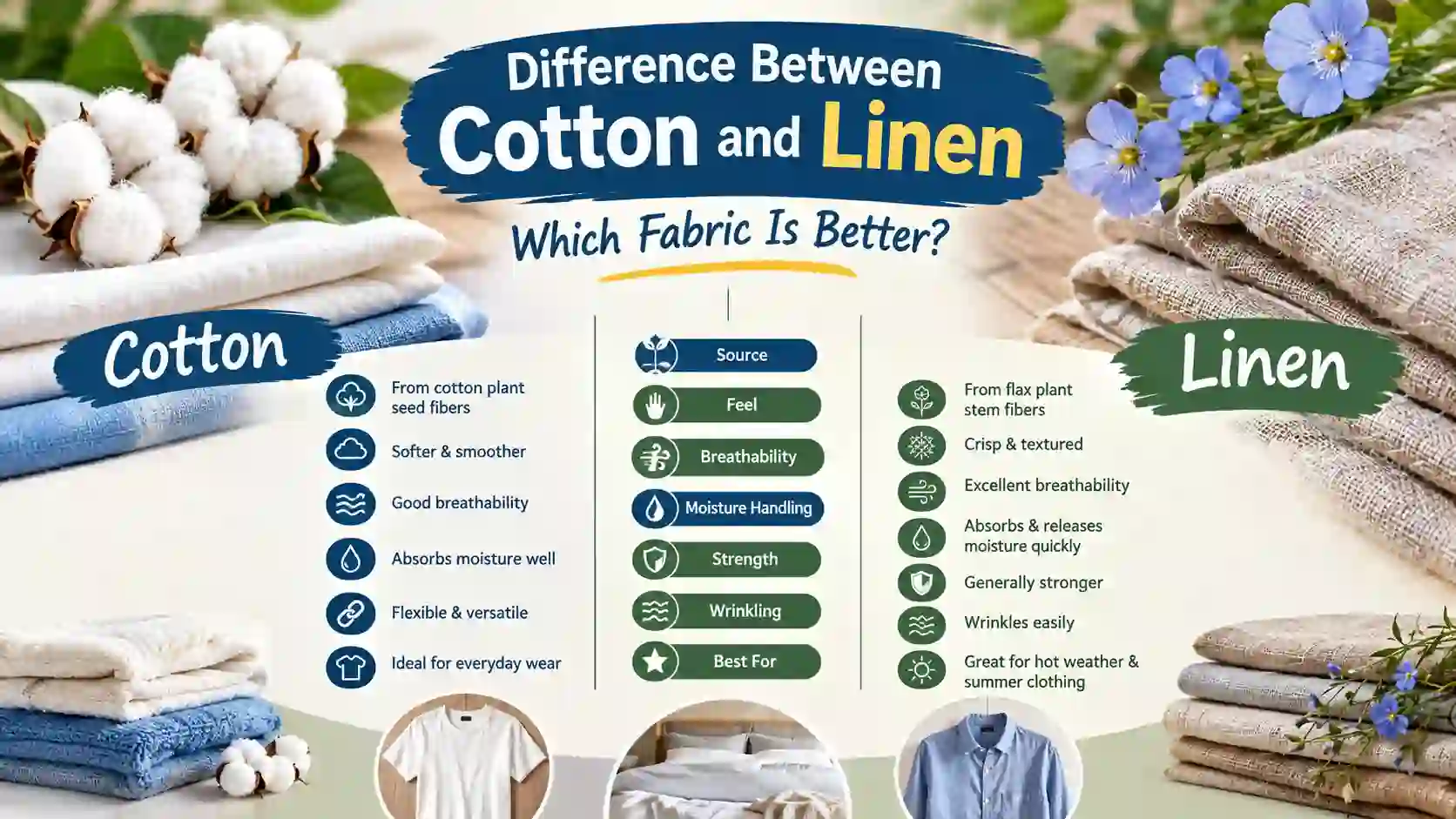
The main difference between cotton and linen is their source and feel. Cotton comes from the seed fibers of the cotton plant, while linen is made from the bast fibers of the flax plant. Cotton is usually softer and more flexible, while linen is stronger, more crisp, and highly breathable. Linen also tends to absorb and release moisture quickly.
| Feature | Cotton | Linen |
| Source | Cotton plant seed fiber | Flax plant stem fiber |
| Feel | Soft and smooth | Crisp and textured |
| Breathability | Good | Excellent |
| Moisture handling | Absorbs moisture well | Absorbs and releases moisture quickly |
| Strength | Strong | Generally stronger |
| Wrinkling | Wrinkles, but usually less | Wrinkles easily |
| Drying | Moderate | Usually dries quickly |
| Best for | Everyday clothing, towels, bedding | Summer clothing, bedding, warm climates |
Introduction
Cotton and linen are both natural plant-based fibers. They are widely used for clothes, bedsheets, towels, curtains, and other textiles.
They may look similar, but they behave differently. The biggest differences are their plant source, texture, strength, breathability, moisture handling, and tendency to wrinkle.
What Is Cotton?
Cotton is a natural cellulose fiber that comes from the seed of the cotton plant. It is one of the best-known natural textile fibers.
Main Characteristics of Cotton
- It feels soft and comfortable.
- It absorbs moisture.
- It can be made into many types of fabric.
- It is flexible and easy to wear.
- It is widely used in everyday clothing.
- Cotton fabric can range from very light to heavy.
Cotton is popular because it offers a good balance of comfort, durability, and easy everyday use.
What Is Linen?
Linen is made from the bast fiber of the flax plant. The fiber comes from the stem of the plant rather than its seeds.
Main Characteristics of Linen
- It has a crisp, natural feel.
- It is highly breathable.
- It handles moisture well.
- It is strong and durable.
- It wrinkles easily.
- It is especially useful in warm weather.
Linen’s strength increases when it is wet, and it can absorb a significant amount of water while still feeling relatively dry.
Core Difference Between Cotton and Linen
1. Source
The fibers come from different parts of different plants.
- Cotton: comes from the seed of the cotton plant.
- Linen: comes from the stem of the flax plant.
This difference in fiber structure helps explain why the two fabrics feel and behave differently.
2. Feel and Texture
Cotton is usually known for its soft and smooth feel.
Linen often feels crisper and slightly rougher when new. With use and washing, linen can become softer while keeping its natural texture.
So, if softness is your main concern, cotton is often the easier choice. If you like a crisp, natural texture, linen may be better.
3. Breathability
Both fabrics can be comfortable in warm weather, but linen is especially well known for ventilation and breathability.
Laboratory testing reported strong ventilation and breathability performance for linen.
In simple terms:
- Cotton: breathable
- Linen: very breathable and well suited to hot conditions
4. Moisture Absorption
Both cotton and linen can absorb moisture.
Linen has a notable advantage in how quickly it can absorb and spread liquid moisture. A flax-linen performance study reports strong moisture-management properties.
This is one reason linen is often used for summer clothing, towels, and bedding.
5. Strength and Durability
Linen fibers are known for their high strength. Linen’s strength also increases when wet.
Cotton is also a strong and useful textile fiber, and its strength increases when wet as well.
The exact durability of a finished fabric, however, depends on more than the fiber. Yarn construction, weave, fabric weight, finishing, and care also matter.
6. Wrinkling
This is one of the easiest differences to notice.
- Cotton: can wrinkle, but many cotton fabrics hold a smoother appearance.
- Linen: wrinkles easily.
Linen’s wrinkles are often considered part of its natural appearance rather than a defect.
7. Drying
Linen is good at managing moisture and can dry quickly. The flax-linen industry reports strong moisture absorption and diffusion properties.
Cotton can also absorb a lot of moisture, but wet cotton may feel heavier and can take longer to dry.
8. Appearance
Cotton can have many different appearances because it is made into a wide range of fabrics.
Linen often has a more natural, slightly textured appearance. Its visible texture and wrinkles give it a relaxed look.
Similarities Between Cotton and Linen
Cotton and linen have several things in common:
- Both are natural plant-based fibers.
- Both are cellulose fibers.
- Both can absorb moisture.
- Both can be used for clothing.
- Both are used for bedding and home textiles.
- Both can be comfortable in warm weather.
- Both can be blended with other fibers.
Cotton vs. Linen for Different Uses
For Everyday Clothes
Cotton is often a practical choice because it is soft, comfortable, and available in many fabric types.
For Hot Weather
Linen is often preferred when breathability and moisture management are important. Its ventilation properties make it well suited to warm conditions.
For Bedsheets
Both can work well.
- Choose cotton for a soft and familiar feel.
- Choose linen for strong breathability, moisture management, and a more textured feel.
Research summarized by the Alliance for European Flax-Linen & Hemp reports strong air permeability and moisture-management performance for linen in bedding applications.
For Towels
Both cotton and linen can be used for towels. Cotton is very common, while linen’s absorbency and quick moisture handling can make it useful for certain towel products.
Common Misconceptions
Is Linen Made From Cotton?
No. Linen and cotton come from different plants.
Cotton comes from the cotton plant, while linen comes from flax.
Is Linen Always Better Than Cotton?
No. There is no universal winner.
Cotton may be better when you want softness, easy everyday comfort, and a wide range of fabric choices. Linen may be better when you want breathability, moisture management, and a crisp natural texture.
Does Linen Always Feel Rough?
No. New linen can feel crisp, but linen can become softer with use and washing.
Does Cotton Mean One Type of Fabric?
No. Cotton is the fiber, not one single type of fabric. Cotton can be woven or knitted into many different fabrics with different weights, textures, and finishes.
Which Is Better: Cotton or Linen?
It depends on what you need.
| If you want… | Better choice |
| Very soft everyday comfort | Cotton |
| Strong breathability | Linen |
| Crisp natural texture | Linen |
| Many fabric choices | Cotton |
| Warm-weather clothing | Linen |
| Soft everyday T-shirts | Cotton |
| Natural, relaxed-looking shirts | Linen |
| Easy-care everyday fabrics | Often cotton |
Neither fiber is automatically better. Cotton is usually the more versatile everyday choice, while linen is especially attractive when breathability, moisture handling, and a crisp natural feel matter.
FAQs
What is the main difference between cotton and linen?
Cotton comes from the seed fibers of the cotton plant, while linen comes from the stem fibers of the flax plant. Cotton is usually softer and more flexible. Linen is generally stronger, more textured, and highly breathable.
Is cotton or linen better for summer?
Linen is often the better choice when maximum breathability and moisture management are important. Cotton can also be comfortable in summer, especially when it is made into a lightweight, breathable fabric.
Which is softer, cotton or linen?
Cotton is usually softer when new. Linen often has a crisp texture at first and becomes softer with use and washing.
Which wrinkles more, cotton or linen?
Linen generally wrinkles more easily. These wrinkles are part of the natural look of many linen fabrics.
Is linen stronger than cotton?
Linen fibers are known for high strength, and linen becomes stronger when wet. Cotton is also a strong textile fiber and becomes stronger when wet. The durability of the finished fabric depends on its construction as well as the fiber.
Can cotton and linen be blended?
Yes. Cotton and linen can be blended to combine some properties of both fibers. The final fabric’s feel and performance depend on the blend ratio and how it is made.
Conclusion
The difference between cotton and linen starts with their source: cotton comes from the seed fiber of the cotton plant, while linen comes from the stem fiber of flax. Cotton is usually softer and more versatile for everyday clothing. Linen is known for its strength, crisp texture, breathability, and strong moisture-management properties.
For soft everyday wear, cotton is often a good choice. For hot weather, strong airflow, and a natural textured look, linen can be an excellent choice. Neither is always better—the right fabric depends on the use.

Hi! I am Arshad Ullah presently working as linguist in Punjab Education Department. I have done MA in English Literature while M.Phil in Applied Linguistics. I have taught creative writing to the post graduation classes for 15 years. Presently I am working as content writer, and offering classes for blog writing. On this site, I research each topic from authoritative sources and edit every comparison for accuracy and clear, simple language.