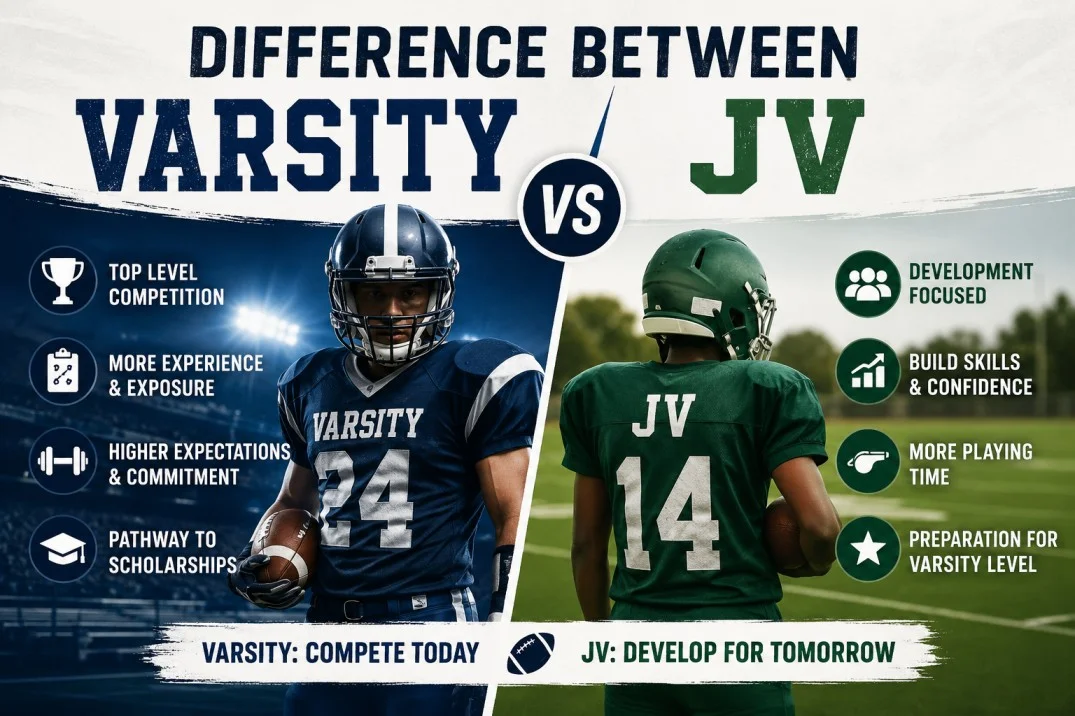
I still remember standing near the gym before a school basketball game and hearing people talk about the “Varsity team” and the “JV team.” At first, I thought they were simply two different teams playing the same sport. Many students, parents, and even new athletes make the same mistake.
The truth is that the difference between varsity and JV can affect playing time, competition level, skill development, confidence, and future athletic opportunities.
Many people compare these teams because they want to know where they fit, which team is better, and what each level means for an athlete’s growth.
Choosing the wrong expectations can lead to disappointment. Some athletes feel discouraged when placed on JV, while others rush into varsity before they are ready.
This guide explains everything in simple English with practical examples so you can clearly understand the real difference.
What Is Varsity?
Varsity is the highest-level team that represents a school in a sport.
These teams usually include the most skilled, experienced, and physically prepared athletes in the school. Varsity players compete against strong opponents and often represent the school in major games, tournaments, and championships.
The word “varsity” comes from the word “university.” Over time, it became associated with a school’s main competitive team.
Purpose of Varsity
- Represent the school at the highest level
- Compete against top opponents
- Win championships and tournaments
- Showcase advanced athletic skills
Who Plays on Varsity?
Varsity players are often:
- Upperclassmen
- Experienced athletes
- Highly skilled competitors
- Strong performers under pressure
Real-World Example
A high school soccer player who has played for several years and consistently performs well may earn a spot on the varsity team.
Many varsity athletes receive more attention from college recruiters because they compete at a higher level.
What Is JV?
JV stands for Junior Varsity.
A JV team serves as a development level for athletes who are still building their skills before moving to varsity.
JV teams help younger or less experienced players gain game experience, improve confidence, and prepare for tougher competition in the future.
Purpose of JV
- Develop athletic skills
- Build confidence
- Provide game experience
- Prepare athletes for varsity competition
Who Plays on JV?
JV athletes are often:
- Freshmen
- Sophomores
- New players
- Developing athletes
Real-World Example
A freshman basketball player may start on the JV team to gain experience before eventually moving up to varsity.
Many successful varsity athletes spent one or more seasons on JV first.
Quick Comparison Table
| Feature | Varsity | JV |
| Meaning | Main competitive team | Development team |
| Purpose | Compete at highest level | Develop future varsity players |
| Skill Level | Advanced | Beginner to intermediate |
| Competition | Stronger opponents | Moderate opponents |
| Playing Time | Often limited by performance | Usually more opportunities |
| Team Importance | Primary school team | Secondary team |
| Pressure Level | High | Lower |
| Athlete Experience | More experienced | Less experienced |
| College Exposure | Higher | Lower |
| Physical Demands | Greater | Moderate |
| Best For | Skilled athletes | Developing athletes |
| Main Advantage | Elite competition | Skill development |
| Main Drawback | Intense pressure | Less recognition |
Biggest Difference
The biggest difference between varsity and JV is the level of competition and athlete experience.
Varsity focuses on winning against the strongest competition, while JV focuses on developing athletes for future success.
This matters more than many beginners realize.
A player on JV may get more playing time and improve faster. A player on varsity may face tougher competition but gain exposure to higher-level opportunities.
Many people first assume varsity is always better. In reality, the best team depends on where an athlete is in their development.
Key Differences Explained
1. Skill Level
Varsity
- Athletes usually have advanced skills
- Strong understanding of the game
- Consistent performance
JV
- Players are still learning
- Focus on improvement
- More room for mistakes
Example
A varsity baseball player may consistently hit fast pitches, while a JV player is still developing that ability.
2. Competition Level
Varsity
- Faces stronger opponents
- Higher intensity games
- More challenging environment
JV
- Faces developing athletes
- Lower competitive pressure
- Easier learning curve
Example
Varsity football teams often compete against the best players from other schools.
3. Athlete Experience
Varsity
- Several years of experience
- Better game awareness
- Stronger leadership
JV
- Less experience
- Learning game strategies
- Building confidence
Example
A senior athlete often competes on varsity, while a freshman begins on JV.
4. Playing Time
Varsity
- Playing time must be earned
- Coaches focus heavily on results
JV
- More athletes get opportunities
- Development is a priority
Example
A JV player may play most of the game, while a varsity player may only play during key situations.
5. Coaching Expectations
Varsity
- High standards
- Strong accountability
- Performance-focused
JV
- Teaching-focused
- More patience
- Skill-building approach
Example
JV coaches often spend more time teaching fundamentals.
6. Pressure and Responsibility
Varsity
- Greater expectations
- Community attention
- More pressure to win
JV
- Lower stress
- Learning environment
- More freedom to develop
Example
Varsity athletes may feel pressure during championship games.
7. College Recruiting Opportunities
Varsity
- More visibility
- Better recruiting opportunities
- Stronger athletic resume
JV
- Limited exposure
- Focus remains on development
Example
College scouts usually attend varsity games rather than JV games.
8. Physical Demands
Varsity
- Faster pace
- Stronger athletes
- Greater endurance required
JV
- Moderate intensity
- Developing fitness levels
Example
Varsity basketball games often move much faster than JV games.
9. Leadership Roles
Varsity
- Team captains
- Veteran athletes
- Leadership expectations
JV
- Learning leadership skills
- Developing confidence
Example
Varsity captains often mentor younger players.
10. Recognition and Prestige
Varsity
- More recognition
- School-wide attention
- Greater prestige
JV
- Less public attention
- Focus on growth
Example
Varsity championship teams often receive awards and media coverage.
11. Long-Term Purpose
Varsity
- Peak school competition
- Advanced performance
JV
- Preparation for varsity
Example
JV serves as a stepping stone toward varsity success.
Similarities Between Them
Although they are different, varsity and JV share many similarities.
- Both represent the school
- Both compete in organized sports
- Both require practice and commitment
- Both have coaches and team structures
- Both help athletes improve
- Both teach teamwork and discipline
This is why many people confuse them.
Both teams contribute to athlete development and school sports culture.
Pros and Cons
Pros of Varsity
- Higher competition level
- Greater recognition
- Better recruiting opportunities
- Strong athletic development
- Competitive environment
Cons of Varsity
- More pressure
- Tougher competition
- Less guaranteed playing time
- Higher expectations
Pros of JV
- More development opportunities
- Greater playing time
- Lower pressure
- Better learning environment
- Confidence building
Cons of JV
- Less recognition
- Lower competition level
- Fewer recruiting opportunities
- Slower exposure to elite competition
Which Is Better for Different Situations?
For Beginners
JV is usually the better choice because it allows athletes to learn and improve.
For Advanced Athletes
Varsity is often the better fit because it provides stronger competition.
For Building Confidence
JV provides a supportive environment.
For College Recruitment
Varsity generally offers greater visibility.
For Long-Term Development
A combination of JV experience followed by varsity competition often works best.
For Younger Students
JV is typically the smartest starting point.
Common Mistakes People Make
Many athletes and parents misunderstand the difference between varsity and JV.
Common mistakes include:
- Thinking JV means failure
- Assuming varsity guarantees success
- Comparing athletes unfairly
- Ignoring development needs
- Rushing into varsity too early
- Focusing only on prestige
- Underestimating the value of playing time
One small difference most people overlook is that regular game experience on JV can sometimes help an athlete improve faster than sitting on the varsity bench.
Expert Recommendation
Choose Varsity If:
- You have strong athletic skills
- You enjoy competition
- You want recruiting exposure
- You are ready for higher expectations
- You perform well under pressure
Choose JV If:
- You are still developing skills
- You need more game experience
- You want consistent playing time
- You are building confidence
- You are new to the sport
Avoid Varsity If:
- You are not physically prepared
- You struggle with intense competition
- You need more development time
Avoid JV If:
- You have clearly outgrown the competition
- You need higher-level challenges
- Your development has plateaued
Final Verdict
When comparing varsity and JV, neither option is automatically better. They serve different purposes.
Varsity is designed for athletes who are ready to compete at the highest school level. JV focuses on growth, learning, and preparation. Many successful athletes spend time on both teams during their journey.
In real-world use, the smartest choice is the team that matches an athlete’s current skill level, confidence, and development needs. Some athletes later regret chasing varsity status too early instead of building a strong foundation on JV.
The goal should not be to earn the most prestigious label. The goal should be to become a better athlete over time. When viewed this way, both varsity and JV play important roles in helping athletes reach their full potential.
Frequently Asked Questions
Which is better, varsity or JV?
Varsity is better for highly skilled athletes seeking stronger competition, while JV is better for athletes who still need development and playing experience.
Is JV easier than varsity?
Yes. JV competition is generally less intense and includes athletes who are still improving their skills.
Can freshmen play varsity?
Yes. Talented freshmen can play varsity if coaches believe they are ready for the higher level of competition.
Do colleges recruit JV players?
Most college recruiters focus on varsity athletes, although exceptional JV players may still attract attention through camps and showcases.
Is playing JV worth it?
Absolutely. JV provides valuable experience, confidence, and skill development that often prepares athletes for future varsity success.
Are varsity and JV interchangeable?
No. Varsity and JV serve different purposes. Varsity focuses on elite competition, while JV emphasizes athlete development.
What do most athletes prefer?
Many athletes aim for varsity because of the prestige and competition. However, many also appreciate the growth opportunities provided by JV.
What mistake should beginners avoid?
The biggest mistake is viewing JV as a setback. For many athletes, JV is the best path to long-term improvement and varsity success.
Conclusion
Understanding the difference between varsity and JV becomes much easier once you look at their purpose. Varsity is the school’s highest competitive level, while JV is designed to develop athletes and prepare them for future success. Both teams offer valuable experiences, but they serve athletes at different stages of growth.
Many people focus only on the prestige of varsity, but long-term athletic development often matters more than the team name. A player who gains confidence, skills, and regular playing time on JV may eventually become a standout varsity athlete.
The best choice depends on current ability, experience, goals, and readiness. Instead of asking which team is better, ask which team will help you improve the most right now. In most cases, the right fit today creates greater success tomorrow.

Hi! I am Arshad Ullah presently working as linguist in Punjab Education Department. I have done MA in English Literature while M.Phil in Applied Linguistics. I have taught creative writing to the post graduation classes for 15 years. Presently I am working as content writer, and offering classes for blog writing. On this site, I research each topic from authoritative sources and edit every comparison for accuracy and clear, simple language.









1 thought on “Difference Between Varsity and JV: A Simple Guide 2026”