Ali wanted to rent a small shop for his new business. The shop owner gave him a lease paper. In that paper, Ali saw two words: “lessor” and “lessee.” He got confused. Which one was the owner? Which one was the renter?
Many people face the same problem. The difference between lessor and lessee is simple, but the words sound alike. That is why learners often mix them up. Understanding the difference between lessor and lessee is useful in renting homes, offices, cars, and land.
These words are common in legal and business English. They are also useful in daily life. Once you learn them, reading rental agreements becomes much easier.
What is “Lessor”?
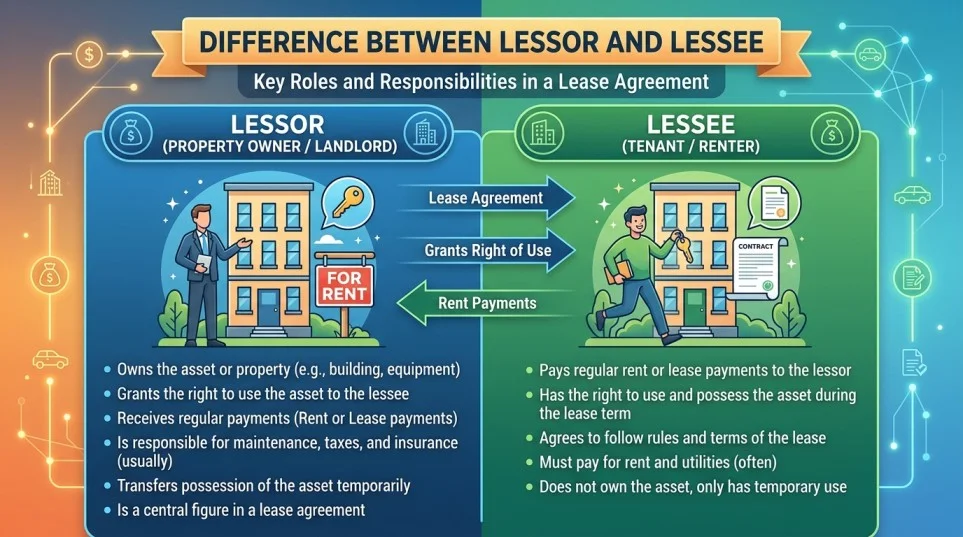
A lessor is the person or company that gives property for rent or lease. The lessor owns the property.
For example, a landlord who rents out a house is the lessor.
History of the Word “Lessor”
The word “lessor” comes from old French and Latin roots. It started from the word “lease,” which means to rent something. In the past, landowners used lease agreements to allow farmers or workers to use land for money. Over time, the owner in the agreement became known as the “lessor.” Today, the word is common in legal and business documents. Banks, landlords, and companies often use it in contracts. The word is mostly used in formal English, especially in property and finance matters.
What is “Lessee”?
A lessee is the person or company that takes property on rent or lease. The lessee uses the property after paying money.
For example, a tenant who rents an apartment is the lessee.
History of the Word “Lessee”
The word “lessee” also comes from the old word “lease.” It entered English through French legal language many years ago. In early times, people rented farms, homes, and animals through written agreements. The person receiving the rented property became known as the “lessee.” Today, the term is used in rental, property, and business contracts around the world. Car rentals, office rentals, and house leases all use this term. It is mainly a legal word, but many people see it in everyday renting situations.
Lessor vs Lessee
A lessor gives the property, while a lessee receives and uses the property.
Now let us understand how both words work in real life.
How “Lessor” Works
The lessor owns the property and allows another person to use it for payment.
Key Features
- Owns the property
- Gives property on rent
- Makes lease agreements
- Receives rent money
- Can be a person or company
Examples
🔵 The lessor rented the office to a new company.
🔵 Sarah became the lessor after buying an apartment building.
Uses
- Property renting
- Car leasing
- Business contracts
- Office rentals
- Land agreements
How “Lessee” Works
The lessee pays money to use the property for a fixed time.
Key Features
- Uses rented property
- Pays rent or lease amount
- Signs lease agreement
- Must follow lease rules
- Can rent homes, cars, or offices
Examples
🟢 The lessee paid monthly rent on time.
🟢 Ahmed was the lessee of the small shop downtown.
Uses
- Renting apartments
- Leasing vehicles
- Office space rentals
- Educational housing
- Business property use
Which One Should You Use?
Use “lessor” when talking about the owner who rents out property. Use “lessee” when talking about the renter or tenant. The choice depends on who gives the property and who receives it.
10 Differences Between Lessor and Lessee
1. Ownership
Lessor
The lessor owns the property.
🔴 The lessor owned three houses.
🔴 The company acted as the lessor of the office.
Lessee
The lessee does not own the property.
🔴 The lessee rented the apartment for one year.
🔴 John became the lessee of the shop.
2. Role in Agreement
Lessor
The lessor gives the lease.
🔴 The lessor signed the lease first.
🔴 The lessor prepared the contract.
Lessee
The lessee accepts the lease.
🔴 The lessee agreed to the rules.
🔴 The lessee signed the rental paper.
3. Payment
Lessor
The lessor receives payment.
🔴 The lessor collected rent monthly.
🔴 The lessor asked for advance payment.
Lessee
The lessee pays money.
🔴 The lessee paid rent on Monday.
🔴 The lessee transferred the lease fee online.
4. Responsibility
Lessor
The lessor may repair major problems.
🔴 The lessor fixed the broken roof.
🔴 The lessor repaired the water pipe.
Lessee
The lessee keeps the place clean.
🔴 The lessee cleaned the apartment daily.
🔴 The lessee followed the building rules.
5. Legal Position
Lessor
The lessor has ownership rights.
🔴 The lessor could renew the contract.
🔴 The lessor checked the property yearly.
Lessee
The lessee has usage rights.
🔴 The lessee used the office for business.
🔴 The lessee parked the leased car outside.
6. Income
Lessor
The lessor earns income from rent.
🔴 The lessor earned money from tenants.
🔴 The lessor invested in rental property.
Lessee
The lessee spends money for usage.
🔴 The lessee paid utility bills too.
🔴 The lessee managed monthly rent costs.
7. Control
Lessor
The lessor has more control over property rules.
🔴 The lessor banned smoking indoors.
🔴 The lessor limited office changes.
Lessee
The lessee follows the rules.
🔴 The lessee respected the building policy.
🔴 The lessee avoided damaging furniture.
8. Duration
Lessor
The lessor can offer short or long leases.
🔴 The lessor gave a five-year lease.
🔴 The lessor renewed the contract again.
Lessee
The lessee uses the property for that period.
🔴 The lessee stayed for two years.
🔴 The lessee moved out after the lease ended.
9. Property Type
Lessor
The lessor can lease homes, land, or vehicles.
🔴 The lessor leased farmland to farmers.
🔴 The lessor rented trucks to companies.
Lessee
The lessee can use different rented items.
🔴 The lessee drove the leased car carefully.
🔴 The lessee farmed the rented land.
10. Main Purpose
Lessor
The lessor provides property for income.
🔴 The lessor bought buildings for leasing.
🔴 The lessor expanded his rental business.
Lessee
The lessee rents property for use.
🔴 The lessee rented a shop for business.
🔴 The lessee leased a car for travel.
Why People Get Confused About Their Use
People get confused because both words look and sound similar. Also, both are connected to renting and leasing. Many learners forget which person owns the property and which person uses it. A simple trick is this: the lessor “lets” the property, while the lessee “uses” the property.
Table: Difference and Similarity
| Feature | Lessor | Lessee | Similarity |
| Meaning | Gives property on rent | Takes property on rent | Both are part of a lease |
| Ownership | Owns property | Does not own property | Both sign agreements |
| Payment | Receives rent | Pays rent | Both handle money |
| Role | Property provider | Property user | Both follow contract terms |
| Responsibility | Handles major ownership issues | Maintains proper use | Both have legal duties |
| Example | Landlord | Tenant | Both appear in lease documents |
Which is Better in What Situation?
A lessor is better when you own property and want to earn money from it. Many people become lessors by renting homes, shops, or cars. It can create regular income.
A lessee is better when you need something for temporary use. Renting is often cheaper than buying. Students, workers, and businesses often become lessees to save money.
How Are “Lessor” and “Lessee” Used in Metaphors and Similes?
🟣 “The lessor held the keys like a king guarding his castle.”
🟣 “The lessee moved into the apartment like a bird finding a nest.”
🟣 “The lessor and lessee worked together like partners.”
Connotative Meaning
Lessor
Usually neutral or positive because the lessor owns property.
🟣 “The lessor helped the family find a safe home.”
Lessee
Usually neutral because it simply means renter.
🟣 “The lessee paid rent honestly every month.”
Idioms or Proverbs
These words are legal terms, so they are not common in idioms. However, leasing ideas appear in daily sayings.
🟣 “A man’s home is his castle.”
Meaning: People value control over their own homes.
🟣 “Good fences make good neighbors.”
Meaning: Clear rules help relationships stay peaceful.
Works in Literature
🟣 Bleak House — Charles Dickens (1853)
Talks about legal agreements and property matters.
🟣 The Grapes of Wrath — John Steinbeck (1939)
Shows landowners and renters during hard times.
Movies Related to the Keywords
🟣 The Money Pit (1986, USA)
A movie about property troubles and ownership.
🟣 99 Homes (2014, USA)
Shows housing, renting, and property struggles.
Frequently Asked Questions
1. Who is the lessor?
The lessor is the owner who rents out property.
2. Who is the lessee?
The lessee is the renter who uses the property.
3. Is a landlord a lessor?
Yes. A landlord is usually the lessor.
4. Is a tenant a lessee?
Yes. A tenant is usually the lessee.
5. Are these words used in legal English?
Yes. They are common in contracts and lease papers.
Final Words
Learning new legal words can feel hard at first. But small steps make learning easy. Once you understand “lessor” and “lessee,” reading rental papers becomes much simpler. Keep practicing with real-life examples.
Conclusion
The difference between lessor and lessee is very easy once you know their roles. A lessor gives property on rent, while a lessee takes property on rent. Both words are important in rental and business agreements. They may sound similar, but their meanings are opposite. Understanding these terms can help students, renters, landlords, and business owners avoid confusion. Practice using them in daily sentences, and soon the words will feel natural and simple.

Hi! I am Arshad Ullah presently working as linguist in Punjab Education Department. I have done MA in English Literature while M.Phil in Applied Linguistics. I have taught creative writing to the post graduation classes for 15 years. Presently I am working as content writer, and offering classes for blog writing. On this site, I research each topic from authoritative sources and edit every comparison for accuracy and clear, simple language.








1 thought on “Difference Between Lessor and Lessee — Simple Guide 2026”