One day, Ali wanted to clean his water tank. His friend said, “Use chlorine.” Later, his mother said, “Use bleach for cleaning clothes.” Ali got confused. Are they the same or different?
This is where the difference between chlorine and bleach becomes important. Many people mix these two words in daily life. The difference between chlorine and bleach helps you use them safely and correctly.
This topic is useful for students, home users, and English learners. It helps you understand cleaning, safety, and basic science. In this guide, you will learn simple meanings, uses, and clear examples.
What is “Chlorine”?
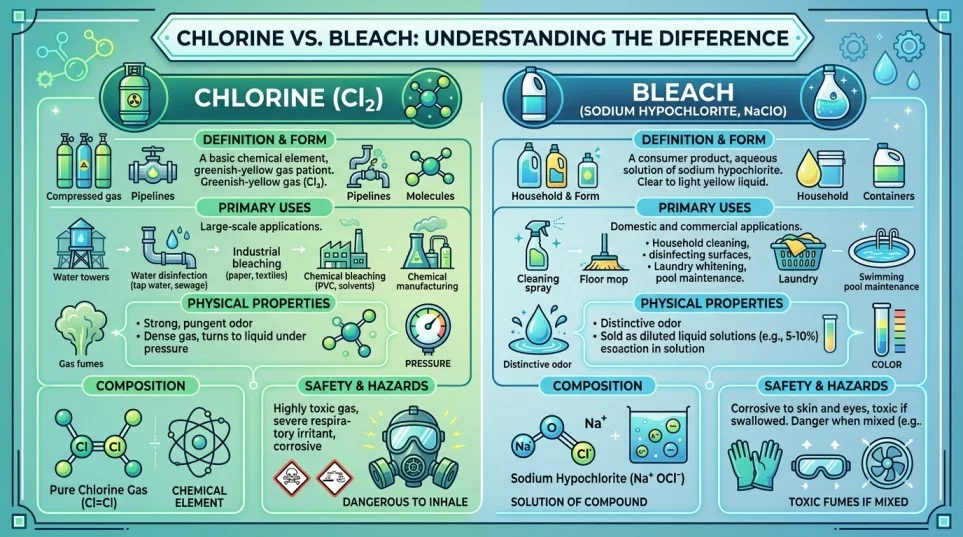
Chlorine is a chemical element. It is a green-yellow gas. It kills germs and bacteria. People use it in water cleaning and swimming pools.
History of Chlorine
Chlorine was discovered in 1774 by Carl Wilhelm Scheele. At first, scientists thought it was part of another substance. Later, in 1810, Sir Humphry Davy proved it was a pure element. The name “chlorine” comes from a Greek word meaning “green.” In the 19th century, people started using chlorine to clean water and control disease. It became very important in public health. Today, chlorine is widely used in water treatment plants, swimming pools, and industries. It helps keep water safe to drink and prevents the spread of harmful germs and bacteria.
What is “Bleach”?
Bleach is a cleaning product. It often contains chlorine or similar chemicals. It is used to clean, whiten, and remove stains.
History of Bleach
Bleach has been used for many years to clean and whiten fabrics. In the 18th century, people used natural sunlight and chemicals like lye for bleaching. In 1785, a French chemist named Claude Louis Berthollet made the first chemical bleach using chlorine. This made cleaning faster and easier. Over time, liquid bleach became popular in homes. Today, bleach is used worldwide for cleaning clothes, disinfecting surfaces, and removing stains. Modern bleach products are safer and easier to use, but they still require care because they contain strong chemicals.
Chlorine vs Bleach
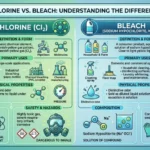
Chlorine is a chemical element, while bleach is a product made using chlorine or similar chemicals.
Now, let’s explore their differences in detail.
How “Chlorine” Works
Key Features:
- It is a natural chemical element
- It kills bacteria and viruses
- It is used in water purification
- It has a strong smell
🔵 Chlorine keeps swimming pool water clean.
🔵 The city uses chlorine to make drinking water safe.
Uses:
- Water treatment plants
- Swimming pools
- Industrial cleaning
How “Bleach” Works
Key Features:
- It is a cleaning product
- It may contain chlorine
- It removes stains and color
- It disinfects surfaces
🟢 She used bleach to clean the floor.
🟢 Bleach made the white shirt bright again.
Uses:
- Laundry cleaning
- Surface cleaning
- Killing germs at home
Which one should you use?
Use chlorine for water safety and large systems. Use bleach for home cleaning and laundry.
10 Differences Between Chlorine and Bleach
1. Nature
Chlorine: A chemical element
🔴 Chlorine is found in nature.
🔴 It exists as a gas.
Bleach: A chemical product
🔴 Bleach is made in factories.
🔴 It comes in liquid form.
2. Form
Chlorine: Gas or solid compounds
🔴 Chlorine gas is used in industry.
🔴 Tablets contain chlorine.
Bleach: Liquid or powder
🔴 Liquid bleach is common at home.
🔴 Powder bleach is used in laundry.
3. Use
Chlorine: Water purification
🔴 Chlorine cleans drinking water.
🔴 It keeps pools safe.
Bleach: Cleaning and whitening
🔴 Bleach removes stains.
🔴 It cleans surfaces.
4. Strength
Chlorine: Very strong
🔴 Chlorine gas is dangerous.
🔴 It needs careful handling.
Bleach: Less strong
🔴 Bleach is diluted.
🔴 It is safer for home use.
5. Smell
Chlorine: Sharp smell
🔴 Pools smell like chlorine.
🔴 It can irritate the nose.
Bleach: Strong but softer smell
🔴 Bleach smells during cleaning.
🔴 It fades after use.
6. Purpose
Chlorine: Kill germs in water
🔴 It stops diseases.
🔴 It keeps water clean.
Bleach: Clean and whiten
🔴 It removes dirt.
🔴 It brightens clothes.
7. Usage Place
Chlorine: Public systems
🔴 Used in water plants.
🔴 Used in large pools.
Bleach: Homes
🔴 Used in kitchens.
🔴 Used in laundry rooms.
8. Safety
Chlorine: More risky
🔴 Gas can harm lungs.
🔴 Needs protection.
Bleach: Safer if used right
🔴 Do not mix with other chemicals.
🔴 Use gloves if needed.
9. Composition
Chlorine: Pure element
🔴 It is on the periodic table.
🔴 Symbol is Cl.
Bleach: Contains chemicals
🔴 Often contains chlorine.
🔴 Mixed with water.
10. Common Use
Chlorine: Industrial and public use
🔴 Used in factories.
🔴 Used in cities.
Bleach: Household use
🔴 Used for cleaning floors.
🔴 Used for washing clothes.
Why People Get Confused About Their Use
People get confused because bleach often contains chlorine. So, they think both are the same. But chlorine is a basic chemical, while bleach is a product made from it.
Table: Difference and Similarity
| Feature | Chlorine | Bleach | Similarity |
| Type | Element | Product | Both are chemicals |
| Form | Gas/solid | Liquid/powder | Used for cleaning |
| Use | Water cleaning | Surface cleaning | Kill germs |
| Strength | Strong | Less strong | Need careful use |
| Place | Industry | Home | Improve hygiene |
Which is Better in What Situation?
Chlorine:
Chlorine is best for large-scale cleaning. It works well in water systems and pools. It is strong and effective for killing germs in water.
Bleach:
Bleach is best for home use. It is easy to use for cleaning clothes and surfaces. It is safer than pure chlorine when used properly.
How Are “Chlorine” and “Bleach” Used in Metaphors and Similes?
🟣 “His words were like chlorine, strong and sharp.”
🟣 “She cleaned the problem like bleach removes stains.”
Connotative Meaning
- Positive: cleaning, safety
🟣 Bleach keeps clothes fresh. - Negative: harsh, strong
🟣 Chlorine smell feels too strong. - Neutral: chemical use
🟣 Both are used in cleaning.
Idioms or Proverbs
🟣 “Clean as bleach” — very clean
Example: The kitchen was clean as bleach.
Works in Literature
🟣 Silent Spring by Rachel Carson (1962)
🟣 The Poison Squad by Deborah Blum (2018)
Movies Related to the Keywords
🟣 Erin Brockovich (2000, USA)
🟣 Dark Waters (2019, USA)
Frequently Asked Questions
1. Is chlorine the same as bleach?
No, chlorine is an element. Bleach is a product.
2. Can I use chlorine at home?
Only in safe forms like tablets.
3. Is bleach safe?
Yes, if used correctly.
4. Which is stronger?
Chlorine is stronger.
5. Can bleach clean water?
Yes, in small safe amounts.
Final Words
Learning simple differences makes life easier. It also keeps you safe. Try to use the right word in the right place. Practice daily and grow your vocabulary.
Conclusion
Understanding the difference between chlorine and bleach helps you use them correctly in daily life. Chlorine is a strong chemical used mainly for water safety. Bleach is a cleaning product used at home. Knowing this difference improves your vocabulary and practical knowledge. It also helps you stay safe while cleaning. Keep learning new words every day to build strong English skills.

Hi! I am Arshad Ullah presently working as linguist in Punjab Education Department. I have done MA in English Literature while M.Phil in Applied Linguistics. I have taught creative writing to the post graduation classes for 15 years. Presently I am working as content writer, and offering classes for blog writing.