Polyps and fibroids are two medical terms often heard in clinics. A woman once visited a doctor for unusual bleeding. She heard the doctor say she might have polyps or fibroids. She felt confused because both sounded similar. This is where understanding the difference between polyps and fibroids becomes important.
The difference between polyps and fibroids matters in health, treatment, and awareness. Many people mix them up because both can grow inside the uterus. However, the difference between polyps and fibroids helps doctors choose the right care.
For learners and health readers, knowing the difference between polyps and fibroids builds clear knowledge and confidence.
Polyps vs Fibroids
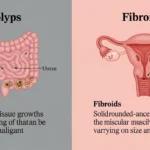
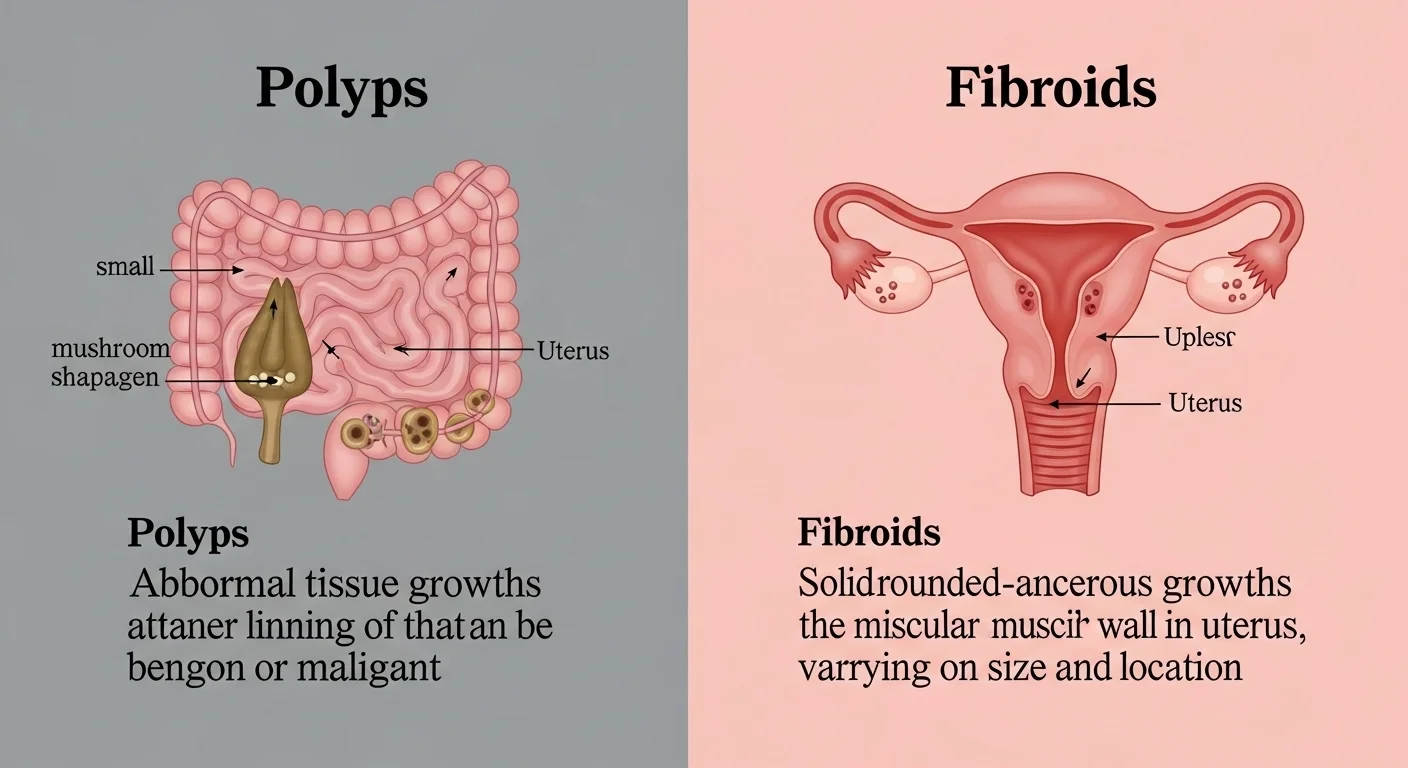
Polyps are soft, small growths from the inner lining of the uterus.
Fibroids are firm, muscular tumors that grow in or around the uterus.
Why is Their Difference Important in Society?
Understanding these terms helps people make better health choices. It supports early diagnosis and proper treatment. It also reduces fear and confusion. For experts, it improves communication. For learners, it builds strong medical vocabulary.
Pronunciation
- Polyps
US: /ˈpɑː.lɪps/
UK: /ˈpɒl.ɪps/ - Fibroids
US: /ˈfaɪ.brɔɪdz/
UK: /ˈfaɪ.brɔɪdz/
Understanding these basics prepares you to explore their detailed differences below.
A List of 10 Differences Between Polyps and Fibroids
1. Nature of Growth
- Polyps: Soft and small tissue growths
🔴 Example: She had a small polyp in the uterus.
🔴 Example: The doctor removed a soft polyp easily. - Fibroids: Hard and muscle-based growths
🟣 Example: She had a large fibroid.
🟣 Example: Fibroids can feel firm in scans.
2. Location
- Polyps: Grow in the uterine lining
🔴 Example: The polyp was inside the lining.
🔴 Example: It stayed attached to the inner wall. - Fibroids: Grow inside, outside, or within uterine walls
🟣 Example: The fibroid grew outside the uterus.
🟣 Example: It formed deep in muscle layers.
3. Size
- Polyps: Usually small
🔴 Example: Most polyps are tiny.
🔴 Example: It looked like a small lump. - Fibroids: Can grow large
🟣 Example: Fibroids can grow very big.
🟣 Example: Some are as large as a melon.
4. Cause
- Polyps: Linked to hormone imbalance
🔴 Example: Hormones caused the polyp.
🔴 Example: Estrogen plays a role. - Fibroids: Linked to genetics and hormones
🟣 Example: Family history matters.
🟣 Example: Hormones also affect fibroids.
5. Symptoms
- Polyps: Light bleeding or spotting
🔴 Example: She noticed slight spotting.
🔴 Example: Bleeding between periods occurred. - Fibroids: Heavy bleeding and pain
🟣 Example: She had heavy periods.
🟣 Example: Pain increased over time.
6. Risk Level
- Polyps: Usually non-cancerous
🔴 Example: Most polyps are harmless.
🔴 Example: Cancer risk is low. - Fibroids: Also mostly non-cancerous
🟣 Example: Fibroids are usually benign.
🟣 Example: Rarely turn serious.
7. Age Group
- Polyps: Common in middle-aged women
🔴 Example: Seen after age 40.
🔴 Example: Often during menopause. - Fibroids: Common in women 20–40
🟣 Example: Found in younger women.
🟣 Example: Often during reproductive age.
8. Detection
- Polyps: Seen in ultrasound or hysteroscopy
🔴 Example: The scan showed a polyp.
🔴 Example: It was clearly visible. - Fibroids: Seen in scans like MRI
🟣 Example: MRI detected fibroids.
🟣 Example: Size was measured easily.
9. Treatment
- Polyps: Removed simply
🔴 Example: Doctor removed it quickly.
🔴 Example: No major surgery needed. - Fibroids: May need surgery or medicine
🟣 Example: Surgery removed fibroids.
🟣 Example: Medicines helped reduce size.
10. Effect on Fertility
- Polyps: May affect fertility slightly
🔴 Example: It blocked implantation.
🔴 Example: Removal improved chances. - Fibroids: Can strongly affect fertility
🟣 Example: Fibroids caused difficulty.
🟣 Example: Treatment helped pregnancy.
Nature and Behaviour
Polyps are usually soft, slow-growing, and less harmful. Fibroids are stronger, larger, and may grow faster. Fibroids can cause more pressure and discomfort compared to polyps.
Why People Get Confused About Their Use
Both grow in the uterus and cause bleeding. Their names sound medical and similar. Many people do not know their structure and behavior differences.
Comparison Table
| Feature | Polyps | Fibroids |
| Type | Soft tissue | Muscle growth |
| Size | Small | Large |
| Pain | Mild | Strong |
| Location | Inner lining | Anywhere in uterus |
| Risk | Low | Low but impactful |
| Cause | Hormones | Hormones + genetics |
Which is Better in What Situation?
Polyps are usually easier to manage. They are small and simple to remove. In most cases, they do not cause serious harm. This makes them less worrying for patients. Early removal can solve the problem quickly and safely.
Fibroids, however, need more attention. They can grow large and cause pain. In some cases, they affect fertility. Treatment may take longer. Still, with proper care, fibroids can also be managed well.
How Are the Keywords Used in Metaphors and Similes?
🟣 “Problems growing like fibroids” (means growing big and hard to handle)
🟣 “Small issues like polyps” (means small but noticeable problems)
Connotative Meaning
- Polyps: Neutral to slightly negative
Example: “A small issue like a polyp.” - Fibroids: More negative (due to size and pain)
Example: “A big problem like fibroids.”
Idioms or Proverbs
🟣 “Nip it in the bud” (like removing polyps early)
🟣 “A growing burden” (like fibroids increasing)
Works in Literature
🟣 Medical Essays on Women’s Health — Non-fiction, Various writers, 2005
Movies Related to the Topic
🟣 Private Life (2018, USA) — discusses fertility issues
Frequently Asked Questions
1. Are polyps and fibroids the same?
No, they are different in structure and size.
2. Which is more dangerous?
Fibroids can cause more problems due to size.
3. Can both be treated?
Yes, both can be treated with proper care.
4. Do they cause pain?
Fibroids cause more pain than polyps.
5. Can they affect pregnancy?
Yes, especially fibroids.
How Are Both Useful for Surroundings?
These terms help doctors explain health clearly. They also help people understand their bodies better. Awareness leads to better health decisions and safer communities.
Final Words for Both
Polyps are small and manageable. Fibroids are larger and need more care. Both require attention but are treatable.
Conclusion
Understanding the difference between polyps and fibroids is very important for health awareness. It helps people recognize symptoms early and seek proper care. Learning these differences also improves medical knowledge and communication. While both are usually non-cancerous, their impact can vary. Polyps are simpler to treat, while fibroids may need more care. Clear knowledge reduces fear and confusion. It also helps patients and doctors work together better. Always stay informed and consult a healthcare expert when needed. Knowledge is the first step toward a healthy life.

Hi! I am Arshad Ullah presently working as linguist in Punjab Education Department. I have done MA in English Literature while M.Phil in Applied Linguistics. I have taught creative writing to the post graduation classes for 15 years. Presently I am working as content writer, and offering classes for blog writing.