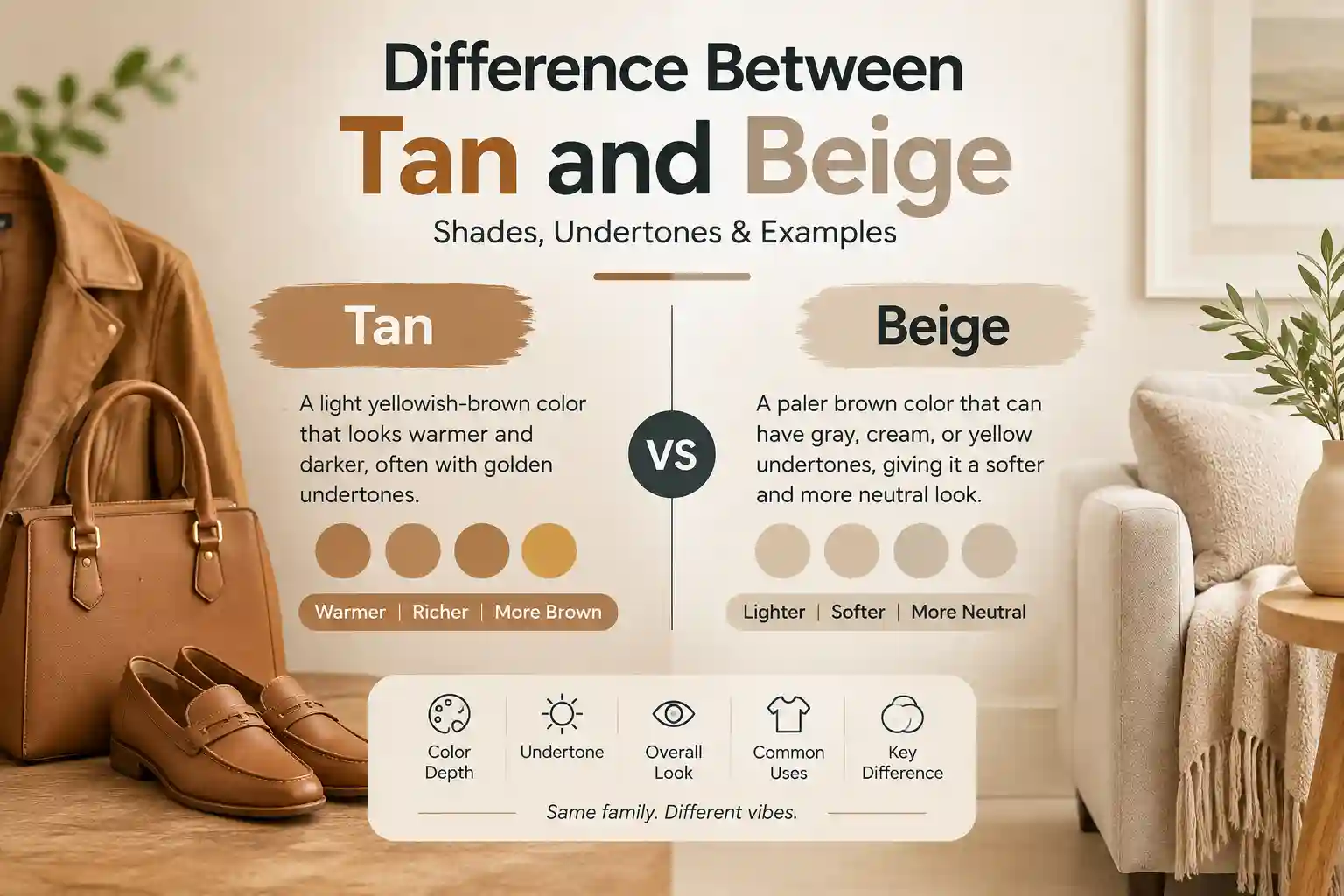
The main difference between tan and beige is their depth and undertone. Tan is usually a light yellowish-brown color and tends to look warmer and darker. Beige is generally a paler brown with gray, cream, or yellow undertones. Both are neutral colors, but tan usually has a stronger brown or golden appearance.
Quick Comparison Table
| Feature | Tan | Beige |
| Basic color | Light yellowish-brown | Pale brown |
| Typical depth | Usually darker | Usually lighter |
| Common undertone | Yellow, golden, or warm brown | Cream, gray, or soft yellow |
| Overall look | Warm and earthy | Soft and neutral |
| Common uses | Leather, clothing, furniture | Clothing, walls, interiors |
| Related color | Light brown | Pale grayish-yellowish brown |
| Pronunciation | /tæn/ | /beɪʒ/ |
| Can describe skin? | Yes | Usually no |
Introduction
Tan and beige are both common neutral colors. They often appear in clothing, furniture, paint, shoes, bags, and interior design.
Because both colors can look like light brown, people sometimes use the names interchangeably. However, they are not exactly the same.
Tan is generally more yellowish-brown and stronger in color. Beige is usually paler and may have gray, cream, or yellow undertones. Cambridge defines tan as a pale yellowish-brown color and beige as a pale brown color.
What Is Tan?
Tan is a light brown or yellowish-brown color. Merriam-Webster defines tan as a light yellowish brown.
Tan is also connected with skin color. A person can have a tan after spending time in the sun. The word can therefore describe both a color and a change in skin color.
Main Characteristics of Tan
- It is usually warmer than beige.
- It often has a yellow or golden undertone.
- It can look like light brown.
- It is common in leather and clothing.
- It can describe sun-darkened skin.
Example:
He wore a tan leather jacket.
What Is Beige?
Beige is a pale brown color. It can have grayish, yellowish, or creamy qualities. Merriam-Webster describes beige as a variable light grayish-yellowish brown.
Beige is often used for neutral backgrounds, clothing, furniture, carpets, and walls.
Main Characteristics of Beige
- It is usually lighter than tan.
- It can have gray or cream undertones.
- It has a soft, muted appearance.
- It is widely used in interior design.
- It is often treated as a neutral color.
Example:
The living room has beige walls.
Core Difference Between Tan and Beige
1. Difference in Color Depth
The easiest way to separate the two is to think about lightness.
Tan usually has more visible brown or golden color.
Beige is usually softer and paler.
However, there is no single universal shade called “tan” or “beige.” Color names can cover a range of shades.
2. Difference in Undertone
Tan commonly has a yellow, golden, or warm brown appearance.
Beige can be grayish, creamy, yellowish, or slightly brown. Merriam-Webster specifically describes beige as light grayish-yellowish brown.
This means two colors can both look light brown but still feel different.
3. Difference in Overall Appearance
Tan usually looks:
- Warmer
- Richer
- More earthy
- More brown
- More golden
Beige usually looks:
- Softer
- Lighter
- More muted
- More neutral
- More cream-like
4. Difference in Use
Tan is common in:
- Leather shoes
- Leather bags
- Jackets
- Belts
- Trousers
- Furniture
Beige is common in:
- Wall paint
- Curtains
- Carpets
- Sofas
- Dresses
- Shirts
- Home decoration
These are common patterns, not strict rules. Either color can be used in many different settings.
5. Difference in Meaning
The word tan has meanings beyond color. It can refer to brown skin caused by exposure to the sun. It can also be a verb meaning to become brown from sunlight.
Beige, by contrast, is mainly used as a color word. Cambridge defines it as a pale brown color.
Tan vs. Beige: Simple Visual Idea
Think of the colors this way:
Cream → Beige → Light Tan → Tan → Light Brown
This is only a general guide. Actual shades can overlap because color names are not fixed scientific categories.
A very warm beige may look similar to a light tan. Likewise, a pale tan may look almost beige.
Similarities Between Tan and Beige
Tan and beige have several things in common:
- Both are neutral or near-neutral colors.
- Both can contain brown and yellow qualities.
- Both work well with many other colors.
- Both are common in clothing.
- Both are popular in home decoration.
- Both can create a warm and natural appearance.
Because their shades overlap, context and undertone can matter more than the name alone.
Common Misconceptions
Is Tan the Same as Beige?
No. They are related but not identical color terms.
Tan is generally a light yellowish-brown color, while beige is generally a paler brown that may have gray, cream, or yellow undertones.
Is Beige Always Lighter Than Tan?
Not always. This is a useful rule for everyday comparison, but color names cover ranges. Some beige shades can be fairly deep, while some tan shades can be very light.
Can Tan and Beige Be Used Interchangeably?
Sometimes, especially in casual conversation. But in fashion, paint, design, or product descriptions, the difference can matter because buyers may expect a particular shade.
When to Use Tan or Beige
Use “Tan” When:
- You are describing a warm yellowish-brown shade.
- You are talking about tan leather.
- You are describing sun-darkened skin.
- The color looks noticeably brown or golden.
Example:
She bought a tan handbag.
Use “Beige” When:
- You are describing a pale brown shade.
- The color has a soft or muted appearance.
- You are describing neutral interior colors.
- The shade is closer to cream or grayish brown.
Example:
They painted the bedroom beige.
FAQs
Is tan darker than beige?
Usually, yes, but not always. Tan generally appears warmer and more brown or golden, while beige is often paler and softer. However, both terms cover a range of shades, so a particular beige can be darker than a particular tan.
What color is closest to tan?
Light brown, camel, khaki, and some shades of beige can be close to tan. The exact appearance depends on the undertone. Tan usually has a noticeable yellowish or warm brown quality.
What color is closest to beige?
Cream, ecru, ivory, and light brown can be close to beige. Ecru is especially related to beige because it refers to a pale or light grayish-yellow or brown color.
Is tan a warm or cool color?
Tan is generally considered a warm neutral because it often contains yellow, golden, or warm brown qualities. However, individual tan shades can vary.
Is beige a warm or cool color?
Beige can be either warm or cool depending on its undertone. A beige with yellow or cream undertones feels warm, while a grayish beige can feel cooler.
Can beige and tan be used together?
Yes. They can create a layered neutral color scheme. For example, beige walls can work with tan furniture or tan leather accessories. Using different shades and textures helps keep the design from looking flat.
Conclusion
The difference between tan and beige is mainly seen in their depth, undertone, and overall appearance. Tan is generally a warmer, more yellowish-brown color, while beige is usually a paler and softer brown with possible gray, cream, or yellow undertones.
The two colors can overlap, so the exact shade matters. If a color looks warmer, more golden, and more brown, tan is often the better name. If it looks pale, soft, creamy, or slightly gray, beige is usually more appropriate.

Hi! I am Arshad Ullah presently working as linguist in Punjab Education Department. I have done MA in English Literature while M.Phil in Applied Linguistics. I have taught creative writing to the post graduation classes for 15 years. Presently I am working as content writer, and offering classes for blog writing. On this site, I research each topic from authoritative sources and edit every comparison for accuracy and clear, simple language.