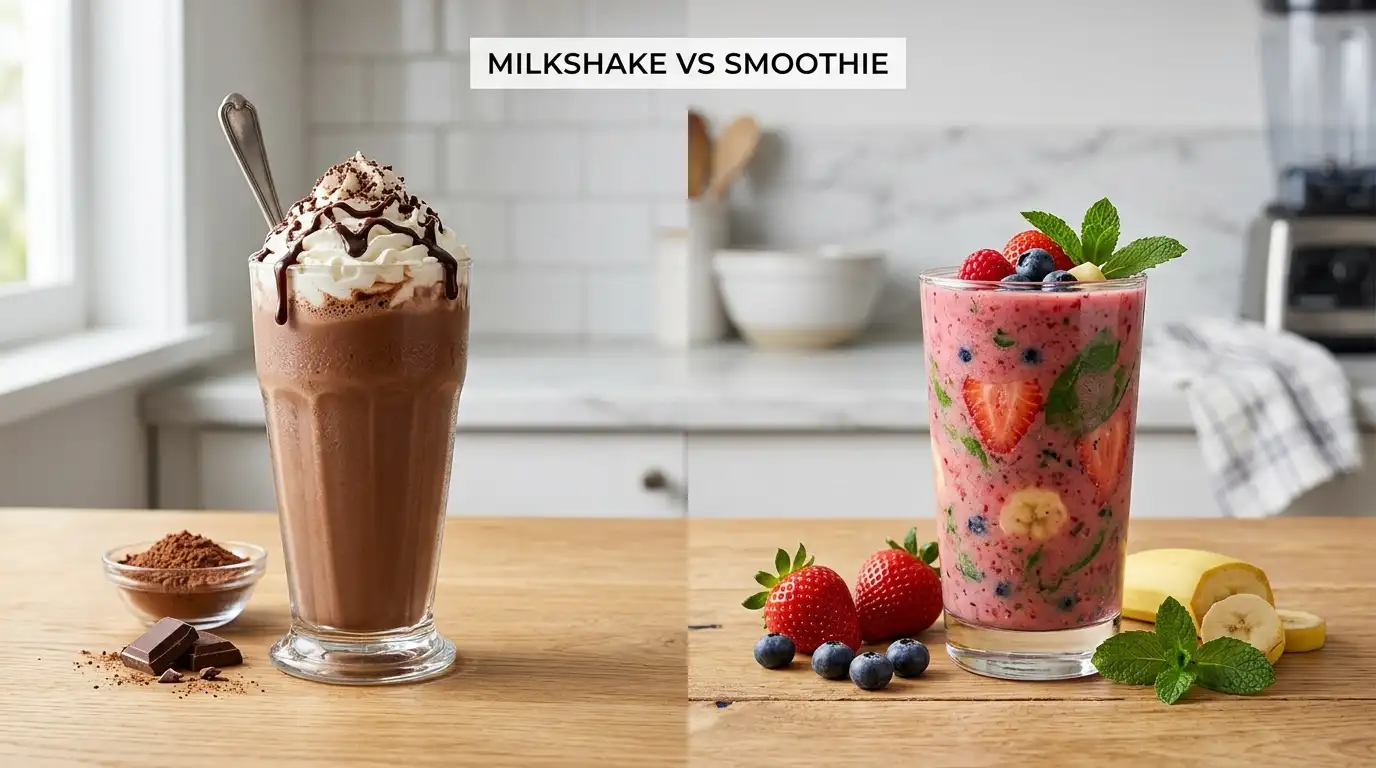
The main difference between a milkshake and a smoothie is their usual ingredients and purpose. A milkshake is a cold, creamy drink made mainly with milk and flavorings, often with ice cream. A smoothie is usually blended from fruit or vegetables with milk, yogurt, juice, water, or another liquid. Smoothies can also include nuts, seeds, or protein-rich ingredients.
| Attribute | Milkshake | Smoothie |
| Main base | Milk, often with ice cream | Fruit or vegetables plus a liquid |
| Common ingredients | Milk, ice cream, syrup, flavorings | Fruit, vegetables, yogurt, milk, juice, water |
| Typical taste | Sweet and dessert-like | Fruity, fresh, or vegetable-based |
| Texture | Thick and creamy | Thick and smooth |
| Nutrition focus | Usually a treat | Can be designed as a nutritious snack or meal |
| Vegetables | Rare | Common in many recipes |
| Protein options | Possible, but not typical | Yogurt, tofu, nuts, seeds, or protein sources can be added |
| Typical purpose | Dessert or sweet drink | Snack, breakfast, or meal supplement |
Introduction
Milkshakes and smoothies can look very similar. Both are cold, thick drinks made in a blender. Both can contain milk, fruit, yogurt, or other ingredients.
But they are not the same drink.
The difference between milkshake and smoothie mainly comes down to the ingredients and the usual purpose of the drink. Milkshakes are commonly made as sweet, creamy treats. Smoothies are more flexible and often contain fruit or vegetables.
The two can overlap. For example, a smoothie can contain milk, and a milkshake can contain fruit. So, the ingredient list matters more than the name alone.
What Is a Milkshake?
A milkshake is a cold beverage made from milk and flavorings. The USDA’s National Agricultural Library defines milkshakes as cold beverages made with milk and flavorings.
Many traditional milkshakes also contain ice cream. Common flavors include:
- Vanilla
- Chocolate
- Strawberry
- Banana
- Coffee
- Caramel
A milkshake is usually made by blending its ingredients until they become thick and creamy.
Main Characteristics of a Milkshake
- Milk is a key ingredient.
- Ice cream is common in many traditional recipes.
- Sweet flavors are common.
- The drink is usually creamy.
- It is often served as a dessert or treat.
Milkshakes can also vary widely. A homemade milkshake may have fewer ingredients than a restaurant version.
USDA food research also lists milkshakes among milk-based drinks and notes that their ingredients can include ice cream or other dairy ingredients.
What Is a Smoothie?
A smoothie is a thick drink made by blending fruits, vegetables, and a liquid. The liquid may be milk, yogurt, juice, water, or a non-dairy alternative. USDA nutrition guidance describes smoothies as drinks that can combine fruits, vegetables, juices, yogurt, nuts, seeds, or milk.
Smoothies are very flexible.
For example, a fruit smoothie might contain:
- Banana
- Strawberries
- Yogurt
- Milk
- Ice
A green smoothie might contain:
- Spinach
- Kale
- Banana
- Berries
- Water or milk
USDA also provides smoothie recipes that combine fruits, vegetables, liquid, and ice.
Main Characteristics of a Smoothie
- Fruit is often a main ingredient.
- Vegetables can be included.
- Milk is optional.
- Yogurt is common but not required.
- Nuts and seeds can be added.
- Protein ingredients can be added.
- The recipe can be sweet or less sweet.
Core Difference Between Milkshake and Smoothie
Difference 1: Main Ingredients
The biggest difference is the usual ingredient base.
A milkshake is built around milk and flavorings, and many versions also use ice cream.
A smoothie is often built around fruit or vegetables plus a liquid.
This means a drink can contain milk without being a milkshake. Milk is also a common smoothie ingredient.
Difference 2: Ice Cream
Ice cream is common in traditional milkshakes.
It is not required for a smoothie.
A smoothie can get its thick texture from frozen fruit, banana, yogurt, ice, or a combination of these ingredients.
So, the presence of ice cream is a useful clue, but it is not an absolute rule for every recipe.
Difference 3: Fruit and Vegetables
Smoothies commonly use fruits and can also include vegetables.
USDA examples include smoothies made with fruits such as berries, bananas, and pineapple, along with leafy greens such as kale or spinach.
Milkshakes can contain fruit, such as strawberries or bananas, but vegetables are not a normal part of a traditional milkshake.
Difference 4: Typical Purpose
Milkshakes are often enjoyed as sweet treats or desserts.
Smoothies are often used as breakfast drinks, snacks, or meal additions.
This does not mean every smoothie is healthy or every milkshake is unhealthy. The ingredients and portion size matter.
For example, a smoothie with a lot of added sugar can be high in sugar. A simple homemade milkshake can also be made with fewer added ingredients.
The American Heart Association suggests choosing smoothies made with fruit and without added sugar as one option for a healthier snack.
Difference 5: Nutrition
Smoothies can be made to include several food groups.
You can add:
- Fruit for flavor and nutrients
- Vegetables for extra plant foods
- Yogurt or milk for dairy
- Nuts or seeds for protein and healthy fats
- Other protein sources when needed
USDA guidance notes that smoothies can be adapted to different dietary needs and can include fruits, vegetables, yogurt, nuts, seeds, and milk.
Milkshakes can also provide nutrients from milk and other dairy ingredients. However, recipes with ice cream, syrups, or other sweet ingredients can make them more dessert-like.
Difference 6: Texture
Both drinks can be thick and creamy.
A milkshake often gets its thick, creamy texture from ice cream and milk.
A smoothie may get its texture from blended fruit, frozen fruit, yogurt, ice, or vegetables.
This is why a banana smoothie can be thick even when it contains no ice cream.
Similarities Between Milkshakes and Smoothies
Milkshakes and smoothies have several things in common.
- Both are usually served cold.
- Both can be made in a blender.
- Both can contain milk.
- Both can contain fruit.
- Both can be thick and creamy.
- Both can be homemade.
- Both can be customized with different flavors.
The main difference is not the blender. It is the recipe and usual ingredient pattern.
Practical Examples
Here are some simple examples.
Example of a Milkshake
Chocolate milkshake:
- Milk
- Chocolate ice cream
- Chocolate syrup
Blend the ingredients until smooth and creamy.
Example of a Fruit Smoothie
Strawberry-banana smoothie:
- Strawberries
- Banana
- Yogurt
- Milk or water
- Ice
Blend until smooth.
Example of a Green Smoothie
Green smoothie:
- Spinach
- Banana
- Blueberries
- Water or milk
- Ice
USDA smoothie guidance includes green smoothies that combine leafy vegetables and fruit with water, juice, or milk.
When to Choose a Milkshake or Smoothie
There is no single best choice for everyone.
Choose a Milkshake When:
- You want a creamy dessert.
- You enjoy ice cream-based drinks.
- You want a sweet treat.
- You prefer classic flavors such as chocolate or vanilla.
Choose a Smoothie When:
- You want to include fruit or vegetables.
- You want a flexible breakfast or snack.
- You want to add yogurt, nuts, seeds, or protein ingredients.
- You prefer a drink that can be adjusted to your dietary needs.
Common Misconceptions
Misconception 1: Every Drink With Milk Is a Milkshake
This is false.
Smoothies can contain milk. USDA guidance gives smoothie examples made with milk or other liquids.
Milk alone does not make a drink a milkshake.
Misconception 2: Every Smoothie Is Healthy
Not necessarily.
A smoothie can contain added sugar, sweetened yogurt, syrups, or other high-calorie ingredients.
The recipe matters.
The American Heart Association recommends smoothies without added sugar as one healthier snack choice.
Misconception 3: A Smoothie Must Contain Yogurt
No.
Yogurt is common in smoothies, but it is not required. Smoothies can use milk, water, juice, or non-dairy alternatives as the liquid.
Misconception 4: A Milkshake Cannot Contain Fruit
It can.
Strawberry and banana milkshakes are common examples. Fruit alone does not automatically make a drink a smoothie.
Which Is Better?
Neither is always better.
The better choice depends on what you want.
A milkshake is a good choice when you want a rich, sweet treat.
A smoothie may be a better fit when you want to include fruit, vegetables, yogurt, nuts, seeds, or other nutritious ingredients.
The recipe is important. A smoothie with lots of added sugar may be less nutritious than a simple homemade shake.
FAQs
Is a smoothie the same as a milkshake?
No. They can look alike, but their usual recipes are different. Milkshakes are generally made with milk and flavorings and often contain ice cream. Smoothies usually focus on blended fruit or vegetables and may use milk, yogurt, juice, water, or another liquid.
Can a smoothie contain milk?
Yes. Milk is a common smoothie ingredient. Smoothies can also use yogurt, juice, water, or non-dairy alternatives. So, having milk in a drink does not automatically make it a milkshake.
Does a smoothie have ice cream?
Usually, no. Ice cream is not a required smoothie ingredient. Smoothies often get their thick texture from fruit, frozen fruit, yogurt, ice, or other ingredients.
Is a milkshake always made with ice cream?
No. Traditional milkshakes often use ice cream, but recipes can vary. The basic USDA definition describes a milkshake as a cold beverage made from milk and flavorings, so ice cream is common but not part of that basic definition.
Which has more fruit, a milkshake or a smoothie?
A smoothie usually has more fruit because fruit is often a main ingredient. A milkshake may contain fruit as a flavor, such as strawberry or banana, but its main base is usually milk and, in many recipes, ice cream.
Can a milkshake be healthy?
It can provide nutrients from ingredients such as milk, but many traditional milkshakes are sweet treats. The nutritional value depends on the recipe, serving size, and ingredients. A homemade version can be adjusted by changing the ingredients.
Can vegetables be used in a milkshake?
They can, but this is unusual. Vegetables are much more common in smoothies. Green smoothies often combine leafy vegetables with fruit and a liquid.
Conclusion
The difference between milkshake and smoothie is mainly found in their usual ingredients and purpose. A milkshake is normally a creamy, sweet drink based on milk and flavorings, often with ice cream. A smoothie usually blends fruit or vegetables with milk, yogurt, juice, water, or another liquid. Smoothies also offer more room for ingredients such as nuts, seeds, and protein sources. Both drinks can contain fruit and milk, so the line is not always absolute. If you want a dessert-like treat, a milkshake is the classic choice. If you want a flexible fruit- or vegetable-based drink, choose a smoothie.

Hi! I am Arshad Ullah presently working as linguist in Punjab Education Department. I have done MA in English Literature while M.Phil in Applied Linguistics. I have taught creative writing to the post graduation classes for 15 years. Presently I am working as content writer, and offering classes for blog writing. On this site, I research each topic from authoritative sources and edit every comparison for accuracy and clear, simple language.