A lot of people grow up hearing the words roti and chapati used like they mean exactly the same thing. In many homes, even parents and grandparents switch between the two without thinking much about it. But once you start cooking regularly, ordering food outside, or traveling across different regions, the small differences become easier to notice.
Many people first assume the difference is only about language. Others believe chapati is healthier, softer, or more “premium.” That confusion is common because restaurants, grocery stores, and even cooking videos often use the terms differently.
One small difference most people overlook is how texture and cooking style change the eating experience. This matters more than many beginners realize, especially for daily meals, lunch boxes, family dinners, or travel food.
The difference between roti and chapati also affects softness, flexibility, cooking method, and how the bread pairs with certain dishes.
This guide explains everything in simple English with practical examples so you can clearly understand the real difference.
What Is Roti?
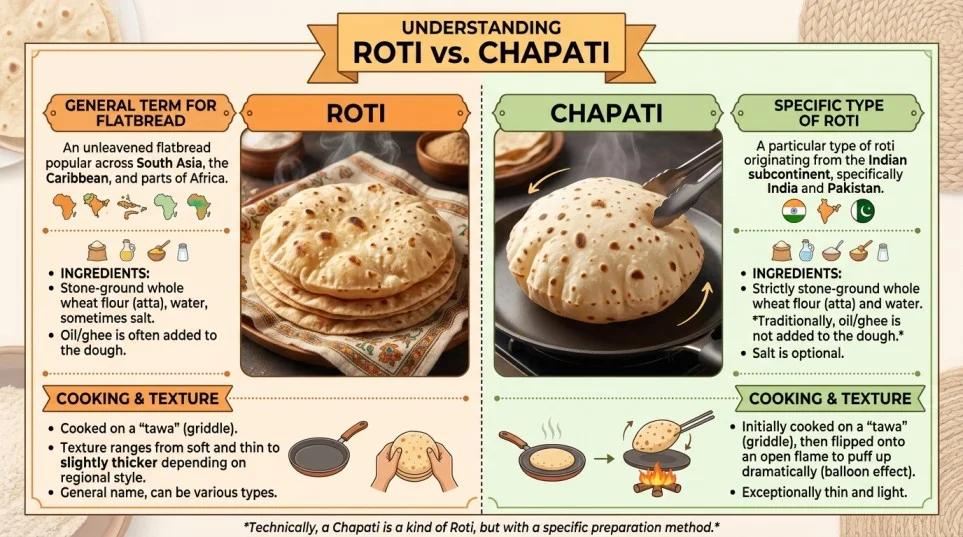
Roti is a traditional flatbread usually made from whole wheat flour and water. It is one of the most common daily foods in South Asian homes, especially in Pakistan, India, Bangladesh, and Nepal.
The word “roti” is actually a broad term. In real-world use, many types of flatbread fall under the roti category. Some are soft and thin, while others are thicker and more rustic.
Traditional roti is cooked on a flat pan called a tawa. In many homes, it is then placed directly on flame for a few seconds so it puffs up. That puffing creates softness and a light texture inside.
For everyday use, roti is popular because it:
- cooks quickly
- feels filling
- pairs well with curry, vegetables, lentils, and meat
- uses simple ingredients
- works for breakfast, lunch, and dinner
After using homemade roti for some time, many families notice that thickness and softness can vary greatly depending on the cook’s skill and dough preparation.
Origin and Cultural Background
Roti has existed for centuries and is deeply connected to South Asian food culture. Farmers, workers, and travelers traditionally preferred roti because it was simple, affordable, and easy to prepare over fire.
Over the long term, roti became more than just bread. In many households, it represents comfort, routine, and homemade food.
What Is Chapati?
Chapati is also a wheat-based flatbread, but it is usually thinner, softer, and rolled more evenly than standard roti.
In many regions, chapati is considered a specific style of roti rather than a completely separate food. However, in real-world cooking, people often treat them differently because the texture and preparation feel different during meals.
Chapati dough is usually kneaded more carefully to create a smoother and softer result. Some cooks also let the dough rest longer, which improves flexibility.
One small difference most people overlook is that chapati often stays soft longer after cooking, especially when wrapped properly.
That is why chapati is commonly used for:
- wraps and rolls
- lunch boxes
- family dinners
- travel meals
- softer eating experiences
Origin and Cultural Background
Chapati has roots in Indian and East African cooking traditions. Over time, it became especially popular in homes where soft texture mattered for children, older adults, or packed meals.
In many modern restaurants, chapati is marketed as softer and more refined compared to regular roti.
Quick Comparison Table
| Feature | Roti | Chapati |
| Meaning | General flatbread | A softer style of roti |
| Texture | Slightly thicker or rustic | Thin and soft |
| Cooking Method | Tawa + flame | Mostly tawa cooked |
| Softness | Moderate | Higher |
| Flexibility | Less flexible | Easy to fold |
| Preparation Effort | Simpler | Slightly more careful |
| Best For | Heavy meals | Wraps and soft meals |
| Shelf Life | Average | Often stays softer longer |
| Popularity | Extremely common | Very popular |
| Main Advantage | Filling and practical | Comfortable texture |
| Main Drawback | Can become dry quickly | Needs smoother dough |
Biggest Difference Between Roti and Chapati
The biggest practical difference is texture and cooking style.
Roti is usually more rustic and filling, while chapati is softer, smoother, and more flexible.
Many beginners think they are completely different foods, but in reality, chapati is often considered a type of roti.
In real-world use, this difference matters most during eating.
For example:
- Roti feels heavier and more satisfying with thick curries.
- Chapati feels lighter and folds more easily for wraps or lunch boxes.
Some users later regret making very thick roti because it becomes chewy after cooling. Chapati usually avoids that problem when prepared correctly.
Key Differences Explained
1. Texture
Roti often has a slightly thicker and firmer bite.
Chapati feels softer and smoother.
For everyday use, families with children often prefer chapati because it is easier to chew.
2. Thickness
Roti can vary in thickness depending on cooking style.
Chapati is usually rolled more evenly and thinly.
That even rolling helps chapati stay flexible longer.
3. Cooking Method
Traditional roti is commonly puffed directly on flame after partial cooking.
Chapati is often fully cooked on the tawa itself.
This creates slightly different textures.
4. Softness After Cooling
Roti may become dry faster if exposed to air.
Chapati often stays softer when wrapped properly.
This matters more than many beginners realize during travel or office lunches.
5. Best Food Pairings
Roti pairs well with heavier foods like lentils, meat curry, and grilled dishes.
Chapati works especially well with wraps, lighter vegetables, and quick meals.
6. Ease of Folding
Chapati folds more easily without cracking.
That makes it practical for lunch rolls and wraps.
Roti may break if it becomes too dry.
7. Dough Preparation
Roti dough is usually simpler and quicker.
Chapati dough often needs more kneading and resting time.
Many home cooks later realize dough quality affects chapati more noticeably.
8. Eating Experience
Roti feels hearty and rustic.
Chapati feels softer and more comfort-focused.
Different families prefer different textures depending on tradition and eating habits.
9. Restaurant Presentation
Restaurants often make chapati look smoother and more uniform.
Homemade roti usually looks more natural and rustic.
10. Travel Convenience
Chapati is often preferred for packed meals because it stays softer longer.
Roti works better for fresh home meals eaten immediately.
11. Regional Usage
In some areas, both names are used interchangeably.
In other regions, people clearly separate chapati from regular roti.
That regional confusion is one reason online searches about this topic remain so common.
Similarities Between Them
Roti and chapati are closely related breads made mainly from wheat flour and water.
Both are:
- cooked on a tawa
- eaten with curry or vegetables
- common in South Asian cuisine
- affordable everyday foods
- healthier than many fried breads
Many people confuse them because the ingredients are very similar.
In some households, the exact same bread may even be called both roti and chapati depending on family tradition.
Pros and Cons
Pros of Roti
- Filling and satisfying
- Quick to prepare
- Great with heavy curries
- Traditional homemade taste
- Budget-friendly
Cons of Roti
- Can become dry quickly
- Sometimes uneven in texture
- Harder to fold for wraps
Pros of Chapati
- Softer texture
- Easier to chew
- Great for wraps and lunch boxes
- Stays flexible longer
- Looks smoother and more refined
Cons of Chapati
- Requires more careful rolling
- Dough preparation matters more
- May feel less filling to some people
Which Is Better for Different Situations?
Best for Families
Chapati usually works better for families with children or older adults because the texture stays softer and easier to chew.
During long dinners, many people also find chapati more comfortable to eat slowly.
Best for Busy Workers
Roti is excellent for physically demanding work because it feels more filling and pairs well with heavier meals.
For office workers, chapati wraps are often easier and cleaner to carry.
Best for Beginners
Beginners usually find roti easier because it requires less precision.
Chapati may take more practice to roll evenly and keep consistently soft.
Best for Travel
Chapati is generally the better option for travel and lunch boxes because it stays flexible longer.
That small convenience becomes very noticeable during long days outside the home.
Common Mistakes People Make
Thinking They Are Completely Different Foods
Many beginners incorrectly assume roti and chapati are unrelated.
In reality, chapati is often considered a specific style of roti.
Making Roti Too Thick
Very thick roti becomes chewy and dry after cooling.
A thinner texture usually improves the eating experience.
Ignoring Dough Resting Time
Some users later regret skipping dough resting because it affects softness significantly, especially for chapati.
Paying Extra Just Because of Marketing
Some restaurants market chapati as premium even when the actual difference is small.
Texture and preparation quality matter more than naming.
Expert Recommendation
Choose Roti If:
- you want a filling everyday bread
- you prefer rustic homemade texture
- you eat heavier curries
- you cook quickly after work
- you want simple preparation
Choose Chapati If:
- you prefer softer bread
- you pack lunches often
- you make wraps regularly
- your family values comfort
- you want flexibility and softness
Avoid Roti If:
- you dislike chewy texture
- you need long-lasting softness
- you want travel-friendly wraps
Avoid Chapati If:
- you prefer heavier bread
- you want very quick preparation
- you do not want careful dough work
FAQ Section
Which is better, roti or chapati?
Neither is universally better. Roti feels more filling and rustic, while chapati feels softer and more flexible. The better option depends on your eating habits, meal type, and texture preference.
Is chapati healthier than roti?
Both are usually made from whole wheat flour, so the nutritional difference is often very small. Healthiness depends more on ingredients, oil usage, and portion size than the actual name.
Which lasts longer after cooking?
Chapati generally stays softer slightly longer when wrapped properly. Roti may dry out faster if exposed to open air for too long.
Which is easier for beginners to make?
Roti is often easier because it does not require perfectly even rolling. Chapati needs smoother dough and more consistent thickness for the best texture.
Are roti and chapati interchangeable?
In many regions, yes. People often use the words interchangeably. However, some cooks distinguish chapati as a softer and thinner type of roti.
What do most people prefer?
Preferences vary by region and family tradition. Some people love the hearty feel of roti, while others prefer the softer texture of chapati for everyday comfort.
What mistakes should beginners avoid?
Beginners should avoid making the dough too dry, rolling bread too thick, or skipping resting time. These small mistakes affect softness more than many people expect.
Final Verdict
The difference between roti and chapati is smaller than many people expect, yet the eating experience can feel surprisingly different over time.
Roti feels practical, filling, and deeply traditional. It suits hearty meals and busy daily cooking routines very well.
Chapati feels softer, smoother, and slightly more comfort-focused. Families, travelers, and lunch-box users often appreciate that extra softness after regular use.
In the end, neither option is universally better.
The right choice depends on your cooking style, texture preference, daily routine, and the kind of meals you enjoy most often.
For many households, the best solution is simple: enjoy both in different situations.

Hi! I am Arshad Ullah presently working as linguist in Punjab Education Department. I have done MA in English Literature while M.Phil in Applied Linguistics. I have taught creative writing to the post graduation classes for 15 years. Presently I am working as content writer, and offering classes for blog writing. On this site, I research each topic from authoritative sources and edit every comparison for accuracy and clear, simple language.