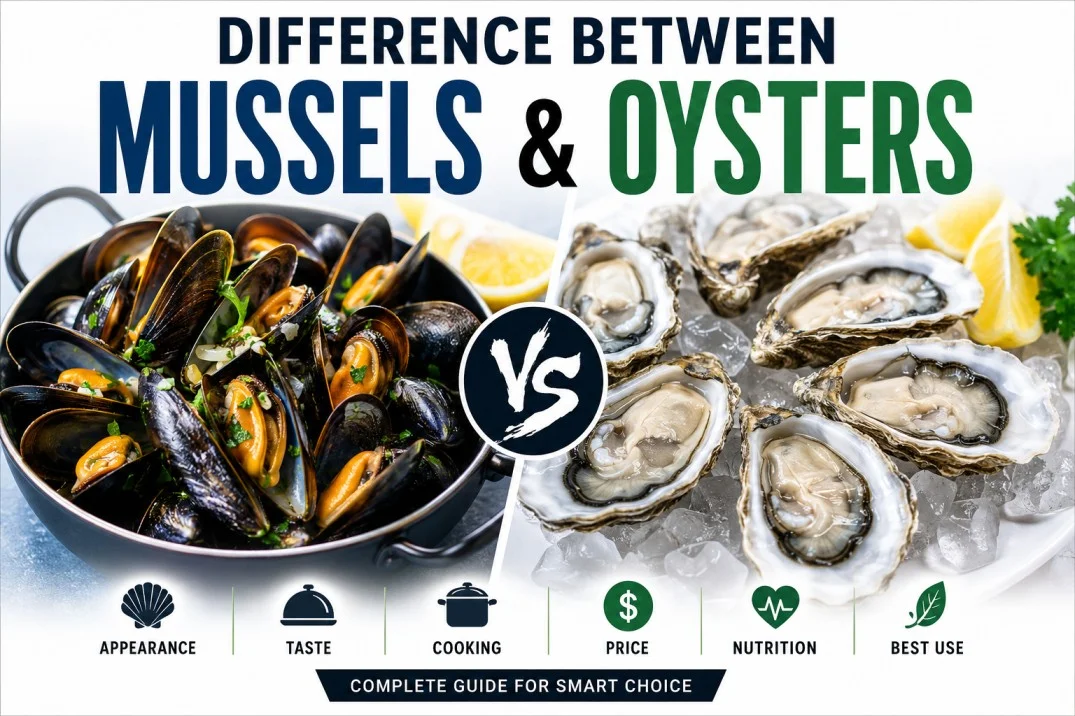
The first time I ordered shellfish at a seafood restaurant, I thought mussels and oysters were almost the same thing. Both came from the sea, both had shells, and both appeared on the same menu. Yet when the food arrived, the taste, texture, and even the way they were served were completely different.
Many people compare mussels and oysters because they look somewhat similar at first glance. Some assume they are interchangeable, while others think one is simply a larger version of the other. This confusion often leads to ordering the wrong seafood dish or misunderstanding how these shellfish are used in cooking.
Understanding the difference between mussels and oysters matters whether you enjoy seafood, cook at home, or simply want to make better choices at a restaurant.
This guide explains everything in simple English with practical examples so you can clearly understand the real difference.
What Are Mussels?
Definition
Mussels are edible shellfish that belong to the mollusk family. They live in both saltwater and freshwater environments and attach themselves to rocks, ropes, and other surfaces.
Purpose and Use
People mainly eat mussels as seafood. They are popular because they are affordable, nutritious, and easy to cook.
How They Work in Nature
Mussels are filter feeders. They pull water through their bodies and collect tiny food particles such as plankton.
Appearance
Mussels usually have:
- Smooth shells
- Dark blue, black, or brown colors
- Long oval shapes
- Thin shells compared to oysters
Who Uses Them?
Mussels are commonly enjoyed by:
- Seafood lovers
- Home cooks
- Restaurant chefs
- Mediterranean cuisine enthusiasts
Real-World Example
A classic bowl of steamed mussels cooked with garlic, butter, and white wine is one of the most popular seafood dishes worldwide.
What Are Oysters?
Definition
Oysters are also edible shellfish and members of the mollusk family. They are best known for their rough shells and unique flavor.
Purpose and Use
Oysters are eaten as seafood, but they also play an important role in marine ecosystems by helping filter water.
How They Work in Nature
Like mussels, oysters are filter feeders. A single oyster can filter large amounts of water daily.
Appearance
Oysters typically have:
- Thick rough shells
- Uneven shapes
- Gray, white, or brown coloring
- Irregular surfaces
Who Uses Them?
Oysters are popular among:
- Seafood enthusiasts
- Fine-dining customers
- Raw seafood lovers
- Coastal communities
Real-World Example
Many restaurants serve raw oysters on ice with lemon and special sauces.
Quick Comparison Table
| Feature | Mussels | Oysters |
| Meaning | Edible mollusk with smooth shell | Edible mollusk with rough shell |
| Shape | Long and oval | Round and irregular |
| Shell Texture | Smooth | Rough and bumpy |
| Taste | Mild and slightly sweet | Briny and complex |
| Texture | Tender and soft | Firm and meaty |
| Cost | Usually cheaper | Usually more expensive |
| Cooking Method | Mostly cooked | Often eaten raw or cooked |
| Difficulty | Easy to prepare | Requires more handling |
| Popularity | Casual seafood dishes | Premium seafood dishes |
| Nutrition | High in protein | High in zinc and minerals |
| Best Use Case | Everyday seafood meals | Gourmet dining experiences |
| Main Advantage | Affordable and versatile | Rich flavor and luxury appeal |
| Main Drawback | Less complex flavor | Higher price |
Biggest Difference
The biggest difference between mussels and oysters is their shell structure, flavor profile, and how people usually eat them.
Mussels are generally cooked before serving. They have a softer texture and a mild taste that works well with sauces and seasonings.
Oysters are often eaten raw and have a stronger ocean flavor. Many seafood lovers enjoy them specifically for their natural salty taste.
This matters more than many beginners realize. If you expect a mild seafood dish and order raw oysters, you may be surprised by their intense flavor. Likewise, someone seeking a rich gourmet seafood experience may find mussels less exciting.
Key Differences Explained
1. Shell Appearance
Mussels
- Smooth shells
- Long and narrow shape
- Usually dark blue or black
Oysters
- Rough shells
- Uneven shape
- Thick and rugged exterior
Real-World Impact
Even beginners can usually tell them apart by simply looking at the shell.
2. Taste
Mussels
- Mild flavor
- Slightly sweet
- Less salty
Oysters
- Strong ocean taste
- Salty and briny
- Complex flavor notes
Example
Many first-time seafood eaters prefer mussels because the taste is gentler.
3. Texture
Mussels
- Soft
- Tender
- Delicate
Oysters
- Firmer
- Meatier
- More substantial
Why It Matters
Texture often influences preference as much as flavor.
4. Cooking Methods
Mussels
- Commonly steamed
- Boiled
- Grilled
Oysters
- Raw
- Grilled
- Baked
- Fried
Real-World Use
Restaurants frequently serve oysters raw, while mussels are usually cooked.
5. Price
Mussels
- More affordable
- Widely available
Oysters
- Generally cost more
- Premium seafood option
Long-Term Consideration
Families or budget-conscious seafood lovers often choose mussels.
6. Nutritional Value
Mussels
- High protein
- Rich in iron
- Good source of vitamin B12
Oysters
- Extremely high in zinc
- Rich in minerals
- Good source of protein
Practical Impact
People looking for zinc-rich foods often choose oysters.
7. Farming and Harvesting
Mussels
- Easier to farm
- Grow quickly
Oysters
- Require more time
- Often need specific growing conditions
Result
Production costs for oysters are usually higher.
8. Serving Style
Mussels
- Served in bowls
- Often accompanied by broth
Oysters
- Frequently served on ice
- Presented individually
Dining Experience
Oysters often feel more luxurious and ceremonial.
9. Lifespan
Mussels
- Shorter lifespan
Oysters
- Can live much longer
Why It Matters
Longer growth periods often contribute to oyster pricing.
10. Pearl Production
Mussels
- Some freshwater mussels can produce pearls
Oysters
- Certain oyster species produce valuable pearls
Common Confusion
Many people assume all pearls come from oysters, which is not true.
11. Environmental Role
Mussels
- Improve water quality
- Support aquatic habitats
Oysters
- Create reef systems
- Filter large amounts of water
Environmental Impact
Both species help maintain healthier aquatic ecosystems.
Similarities Between Them
Despite their differences, mussels and oysters share many characteristics.
Both Are Mollusks
They belong to the same broad family of shellfish.
Both Filter Water
They feed by filtering tiny particles from water.
Both Are Seafood
Restaurants often place them in the same menu category.
Both Are Nutritious
They provide protein, vitamins, and minerals.
Both Live in Aquatic Environments
They depend on clean water for survival.
This is why people often confuse them.
Pros and Cons
Pros of Mussels
- Affordable
- Easy to cook
- Mild flavor
- High protein content
- Great for family meals
Cons of Mussels
- Less premium reputation
- Shorter shelf life
- Flavor can be less exciting for some seafood fans
Pros of Oysters
- Unique flavor
- Rich in zinc
- Often considered a delicacy
- Can be eaten raw
- Premium dining experience
Cons of Oysters
- More expensive
- Strong flavor may not suit everyone
- Raw consumption concerns
- Require careful handling
Which Is Better for Different Situations?
For Beginners
Mussels are usually the better choice because their flavor is milder.
For Seafood Enthusiasts
Oysters offer a more distinctive and memorable experience.
For Families
Mussels often provide better value and broader appeal.
For Fine Dining
Oysters are commonly associated with upscale restaurants.
For Budget Buyers
Mussels are generally the smarter option.
For Nutritional Zinc Intake
Oysters have the advantage.
For Everyday Meals
Mussels are easier and more practical.
For Special Occasions
Oysters often feel more luxurious.
Common Mistakes People Make
Assuming They Taste the Same
Their flavors are very different.
Ordering Raw Oysters Without Knowing the Flavor
Many people first assume oysters will taste like cooked seafood.
Choosing Based Only on Price
The cheaper option is not always the wrong option.
Ignoring Preparation Style
Cooking methods greatly affect the experience.
Believing Oysters Are Always Better
Premium pricing does not automatically mean better for everyone.
Confusing Shell Appearance
Many beginners overlook how different the shells actually are.
Expert Recommendation
Choose Mussels If:
- You are new to shellfish
- You prefer mild seafood
- You want affordable meals
- You cook seafood at home
- You need family-friendly dishes
Choose Oysters If:
- You enjoy strong ocean flavors
- You like raw seafood
- You want a premium dining experience
- You value high zinc content
- You enjoy exploring unique foods
Avoid Mussels If:
- You want intense seafood flavor
- You seek a luxury seafood experience
Avoid Oysters If:
- You dislike salty foods
- You are uncomfortable with raw seafood
- You have a limited seafood budget
Final Verdict
When comparing mussels and oysters, neither is universally better. The right choice depends on what you value most.
Mussels are affordable, easy to cook, beginner-friendly, and perfect for everyday seafood meals. Their mild flavor makes them approachable for people who are still exploring shellfish.
Oysters offer a richer and more complex experience. Their strong ocean taste, premium reputation, and impressive nutritional profile make them a favorite among seafood enthusiasts.
After trying both, many people discover they serve different purposes rather than competing directly. Mussels often shine in comforting meals, while oysters are frequently chosen for special occasions and gourmet dining.
If you are just starting your seafood journey, mussels are usually the safest first step. If you enjoy bold flavors and unique culinary experiences, oysters may become your favorite.
FAQ Section
Which is better, mussels or oysters?
Neither is objectively better. Mussels are usually better for beginners because they are affordable and mild. Oysters are preferred by people who enjoy strong seafood flavors and premium dining experiences.
Are mussels and oysters interchangeable?
Not usually. Their taste, texture, and serving styles are different. A recipe designed for mussels may not deliver the same result when oysters are substituted.
Which lasts longer, mussels or oysters?
Oysters generally have a longer natural lifespan. However, both should be consumed fresh after purchase to ensure quality and safety.
Which is easier to cook?
Mussels are generally easier to prepare. Most recipes involve steaming them until the shells open. Oysters often require more skill, especially when served raw.
Which is best for beginners?
Mussels are usually the best choice for beginners. Their softer flavor and lower price make them less intimidating than oysters.
What do most people prefer?
Preferences vary by region and personal taste. Casual seafood eaters often prefer mussels, while seafood enthusiasts frequently choose oysters for their distinctive flavor.
Are oysters healthier than mussels?
Both are healthy foods. Oysters contain exceptionally high levels of zinc, while mussels provide excellent protein, iron, and vitamin B12.
What mistakes should beginners avoid?
Avoid assuming oysters and mussels taste the same. Also, do not order raw oysters without understanding their strong briny flavor and unique texture.
Conclusion
The difference between mussels and oysters goes far beyond appearance. While both are nutritious shellfish, they offer very different eating experiences. Mussels are known for their mild flavor, soft texture, affordability, and versatility in everyday cooking. Oysters stand out for their bold ocean taste, premium reputation, and impressive mineral content, especially zinc.
Many people first assume these shellfish are interchangeable, but that misconception often leads to disappointment. The best choice depends on your budget, taste preferences, and dining goals. If you want a simple and approachable seafood option, mussels are often the smarter pick. If you enjoy adventurous flavors and gourmet experiences, oysters may be worth the extra cost.
Understanding these differences helps you order, cook, and enjoy seafood with greater confidence and satisfaction.

Hi! I am Arshad Ullah presently working as linguist in Punjab Education Department. I have done MA in English Literature while M.Phil in Applied Linguistics. I have taught creative writing to the post graduation classes for 15 years. Presently I am working as content writer, and offering classes for blog writing. On this site, I research each topic from authoritative sources and edit every comparison for accuracy and clear, simple language.