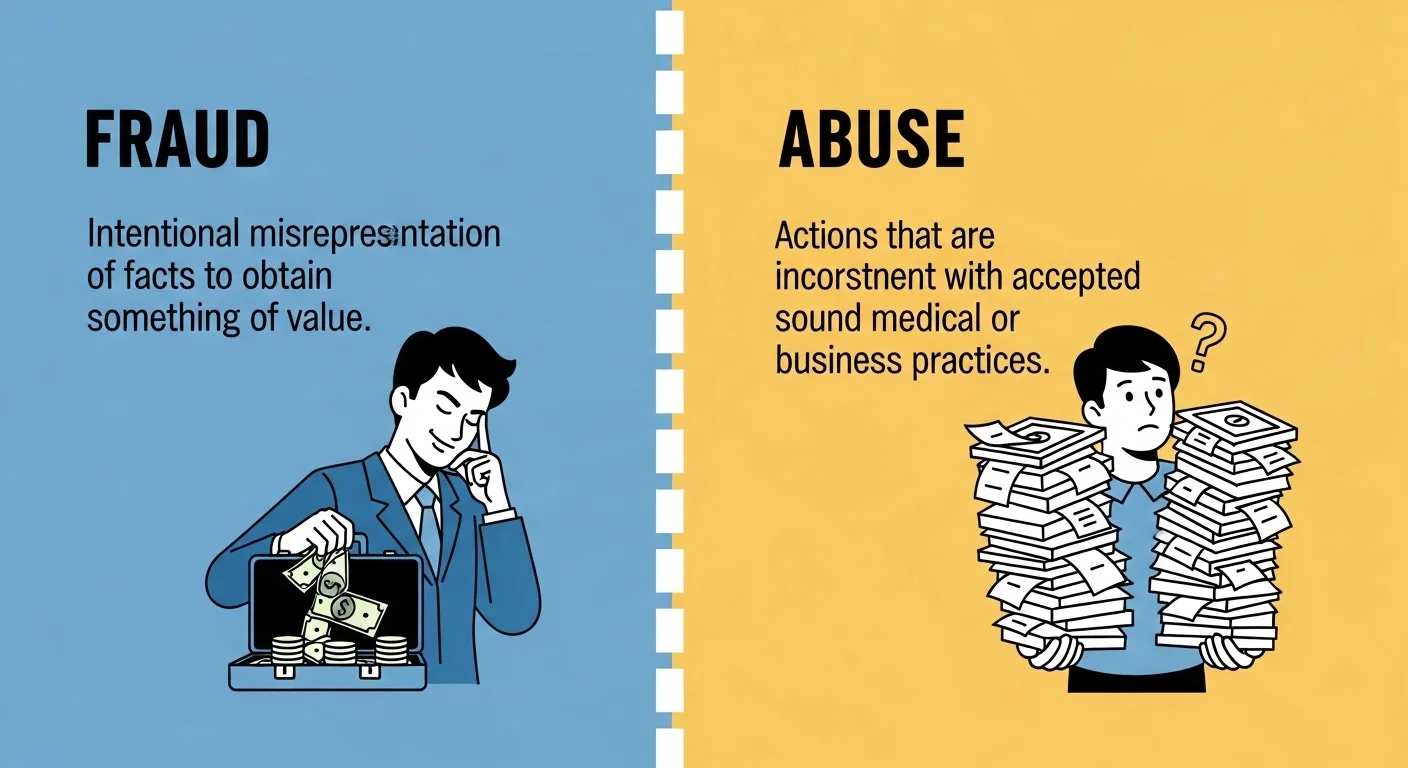
Fraud and abuse are common words in law and daily life. Fraud means cheating on purpose to get money or benefit. Abuse means wrong or harmful use of something or someone.
Think of a man who lies on a form to get money—this is fraud. Now think of a person who uses a system too much in an unfair way—this is abuse.
The difference between fraud and abuse is important for students, workers, and leaders. In many jobs, people must know this difference between fraud and abuse to follow rules.
In society, knowing the difference between fraud and abuse helps stop harm and build trust. This article explains the difference between fraud and abuse with simple words, examples, pronunciation, and real uses.
Fraud vs Abuse
Fraud is intentional deception. Abuse is misuse without clear intent to cheat.
Why does Their Difference Matter in Society?
Knowing the difference helps people follow laws and act fairly. It protects money, systems, and people. It also helps experts find problems and fix them. Clear use of these words builds trust in schools, offices, and public services.
Pronunciation (US & UK)
- Fraud
US: /frɔːd/
UK: /frɔːd/ - Abuse
(noun) US: /əˈbjuːs/ | UK: /əˈbjuːs/
(verb) US: /əˈbjuːz/ | UK: /əˈbjuːz/
Now, let’s move to the main comparison with clear points and examples.
A List of 30 Differences Between Fraud and Abuse
1. Intention
- Fraud: Done on purpose to cheat
🔴 He lied on tax forms.
🔴 She created fake bills. - Abuse: May not be planned to cheat
🟣 He used the service too often.
🟣 She ignored usage rules.
2. Legality
- Fraud: Always illegal
🔴 The company faced fraud charges.
🔴 He was jailed for fraud. - Abuse: Not always illegal but wrong
🟣 Overuse of benefits is abuse.
🟣 It may break policy, not law.
3. Nature
- Fraud: Deception and lies
🔴 He used a false identity.
🔴 She hid true facts. - Abuse: Misuse or overuse
🟣 He wasted company resources.
🟣 She used leave unfairly.
4. Awareness
- Fraud: Person knows it is wrong
🔴 He planned the scam.
🔴 She knew it was illegal. - Abuse: Person may not know fully
🟣 He did not read rules.
🟣 She thought it was allowed.
5. Impact
- Fraud: Big financial harm
🔴 Bank lost money.
🔴 Customers were cheated. - Abuse: Smaller but still harmful
🟣 System became weak.
🟣 Resources were wasted.
6. Proof
- Fraud: Needs strong evidence
🔴 Police need clear proof.
🔴 Records show false data. - Abuse: Harder to prove
🟣 It depends on usage patterns.
🟣 It is often unclear.
7. Punishment
- Fraud: Legal punishment
🔴 He went to jail.
🔴 She paid a fine. - Abuse: Warning or penalty
🟣 He got a warning.
🟣 She lost access.
8. Example Areas
- Fraud: Banking, tax, insurance
🔴 Fake insurance claims.
🔴 False bank details. - Abuse: Workplace, healthcare
🟣 Overuse of sick leave.
🟣 Misuse of benefits.
9. Frequency
- Fraud: Planned and rare
🔴 One big scam.
🔴 Organized cheating. - Abuse: Can happen often
🟣 Daily misuse.
🟣 Repeated small actions.
10. Ethics
- Fraud: Clearly unethical
🔴 Everyone sees it as wrong.
🔴 It breaks trust fully. - Abuse: Ethically wrong but less clear
🟣 Some may ignore it.
🟣 It still harms fairness.
Nature and Behaviour of Both
Fraud is planned, secret, and dishonest. It involves lies and tricks. Abuse is careless or unfair use. It may come from habit, lack of knowledge, or weak rules.
Why People Get Confused About Their Use
People confuse them because both cause harm. Both involve wrong actions. The difference is intent. Fraud is planned cheating. Abuse is unfair use, not always planned.
Table: Difference and Similarity
| Feature | Fraud | Abuse | Similarity |
| Intent | Clear cheating | Not always clear | Both harmful |
| Law | Illegal | Sometimes not illegal | Both against rules |
| Nature | Deception | Misuse | Both unethical |
| Impact | High | Medium | Cause loss |
| Frequency | Rare | Common | Need control |
Which Is Better in What Situation?
Fraud is never acceptable. It must be stopped with strict laws. Systems must detect fraud early. Abuse is also wrong, but it needs awareness and better rules. Training and clear policies can reduce abuse. In daily life, it is easier to fix abuse by guiding people. Fraud needs strong action like legal steps.
How Are the Keywords Used in Metaphors and Similes?
🟣 Fraud is like a hidden trap that cheats people.
🟣 Abuse is like using water without care until it runs out.
Connotative Meaning
- Fraud: Strong negative
Example: Fraud destroys trust. - Abuse: Negative but sometimes mild
Example: Abuse of power harms people.
Idioms and Proverbs
🟣 “Honesty is the best policy” – used to avoid fraud
🟣 “Too much of anything is bad” – relates to abuse
Works in Literature
🟣 The Great Gatsby (Novel, F. Scott Fitzgerald, 1925) – shows fraud in identity
🟣 Animal Farm (Political satire, George Orwell, 1945) – shows abuse of power
Movies on the Keywords
🟣 Catch Me If You Can (2002, USA) – about fraud
🟣 Spotlight (2015, USA) – shows abuse of power
Frequently Asked Questions
1. What is the main difference between fraud and abuse?
Fraud is planned cheating. Abuse is unfair use.
2. Is abuse always illegal?
No, it may only break rules.
3. Can abuse become fraud?
Yes, if intent to cheat appears.
4. Which is more serious?
Fraud is more serious.
5. Why is it important to know the difference?
It helps follow rules and avoid harm.
How Are Both Useful for Surroundings?
Understanding these terms helps protect systems and people. It builds fair use of resources. It also improves trust in society.
Final Words for Both
Fraud is a serious crime with clear intent. Abuse is misuse that still needs control. Both must be reduced for a fair society.
Conclusion
The difference between fraud and abuse is simple but important. Fraud means planned cheating, while abuse means unfair use. Knowing this difference improves understanding in law, work, and daily life. It helps people act responsibly and avoid harm. It also supports fair systems and strong trust. By learning these terms, we can communicate better and make better choices. Practice using them in daily speech. Over time, your understanding will grow stronger and clearer.

Hi! I am Arshad Ullah presently working as linguist in Punjab Education Department. I have done MA in English Literature while M.Phil in Applied Linguistics. I have taught creative writing to the post graduation classes for 15 years. Presently I am working as content writer, and offering classes for blog writing.