One morning, Sara stood in front of a beauty store shelf. She wanted healthy skin but felt confused. The shelf had many products. Two bottles caught her eye: essence and serum. Both promised glowing skin. But she wondered what the difference between essence and serum really was.
Many people face the same problem. In modern skincare routines, the difference between essence and serum often confuses beginners and even skincare lovers. Both products look light and watery. Both help the skin. Yet they do different jobs.
Understanding the difference between essence and serum helps people choose the right product. When people know the difference between essence and serum, they build a smarter skincare routine. This small knowledge can improve skin health and prevent wasting money on the wrong product.
Pronunciation
Essence
- US: /ˈes.əns/
- UK: /ˈes.əns/
Serum
- US: /ˈsɪr.əm/
- UK: /ˈsɪə.rəm/
Knowing the meaning and sound of these words helps learners understand them better. Now let us explore their real differences in detail.
10 Differences between Essence and Serum
1. Purpose
- Essence: It mainly hydrates the skin and prepares it for other products.
🟣 Example 1: After washing her face, Anna used essence to add moisture.
🟣 Example 2: Essence helped her skin absorb the next cream better. - Serum: It treats specific skin problems like wrinkles or dark spots.
🟣 Example 1: John used vitamin C serum for bright skin.
🟣 Example 2: A retinol serum helped reduce his fine lines.
2. Texture
- Essence: Very light and watery.
🟣 Example 1: The essence felt like water on Maria’s skin.
🟣 Example 2: It spread easily and absorbed fast. - Serum: Thicker and more concentrated.
🟣 Example 1: The serum felt slightly sticky at first.
🟣 Example 2: Only a few drops were enough.
3. Concentration of Ingredients
- Essence: Contains mild active ingredients.
🟣 Example 1: Green tea essence gently refreshed the skin.
🟣 Example 2: Rice essence improved skin softness slowly. - Serum: Contains stronger active ingredients.
🟣 Example 1: Hyaluronic acid serum gave deep hydration.
🟣 Example 2: Niacinamide serum reduced acne marks.
4. Stage in Skincare Routine
- Essence: Applied after toner.
🟣 Example 1: Lisa used toner first and essence next.
🟣 Example 2: It prepared her skin for serum. - Serum: Applied after essence.
🟣 Example 1: Tom used serum after essence.
🟣 Example 2: The serum targeted his dark spots.
5. Skin Benefits
- Essence: Improves hydration and softness.
🟣 Example 1: Daily essence made her skin smoother.
🟣 Example 2: Her skin looked fresh every morning. - Serum: Solves specific skin issues.
🟣 Example 1: Anti-aging serum reduced wrinkles.
🟣 Example 2: Acne serum helped control breakouts.
6. Quantity Used
- Essence: Used in larger amounts.
🟣 Example 1: She poured essence on her palm.
🟣 Example 2: She gently patted it on her face. - Serum: Used in small drops.
🟣 Example 1: Two drops were enough for the face.
🟣 Example 2: A dropper bottle helped control use.
7. Skin Penetration
- Essence: Works on surface hydration.
🟣 Example 1: It softened the top layer of skin.
🟣 Example 2: Skin felt smooth after use. - Serum: Penetrates deeper into skin layers.
🟣 Example 1: Vitamin serum improved skin tone.
🟣 Example 2: Retinol serum repaired deeper damage.
8. Target Users
- Essence: Good for all skin types.
🟣 Example 1: Dry skin users like essence hydration.
🟣 Example 2: Oily skin users enjoy its light feel. - Serum: Selected based on skin concerns.
🟣 Example 1: Acne serum for oily skin.
🟣 Example 2: Anti-aging serum for mature skin.
9. Origin in Skincare Culture
- Essence: Popular in Korean skincare routines.
🟣 Example 1: K-beauty brands promote essence strongly.
🟣 Example 2: Many Korean routines use essence daily. - Serum: Common in global skincare routines.
🟣 Example 1: Western brands sell many serums.
🟣 Example 2: Dermatologists often recommend serums.
10. Price Range
- Essence: Usually less expensive.
🟣 Example 1: Drugstore essences are affordable.
🟣 Example 2: Large bottles last long. - Serum: Often more expensive due to strong ingredients.
🟣 Example 1: Anti-aging serums can be costly.
🟣 Example 2: Premium vitamin serums cost more.
Nature and Behaviour of Both
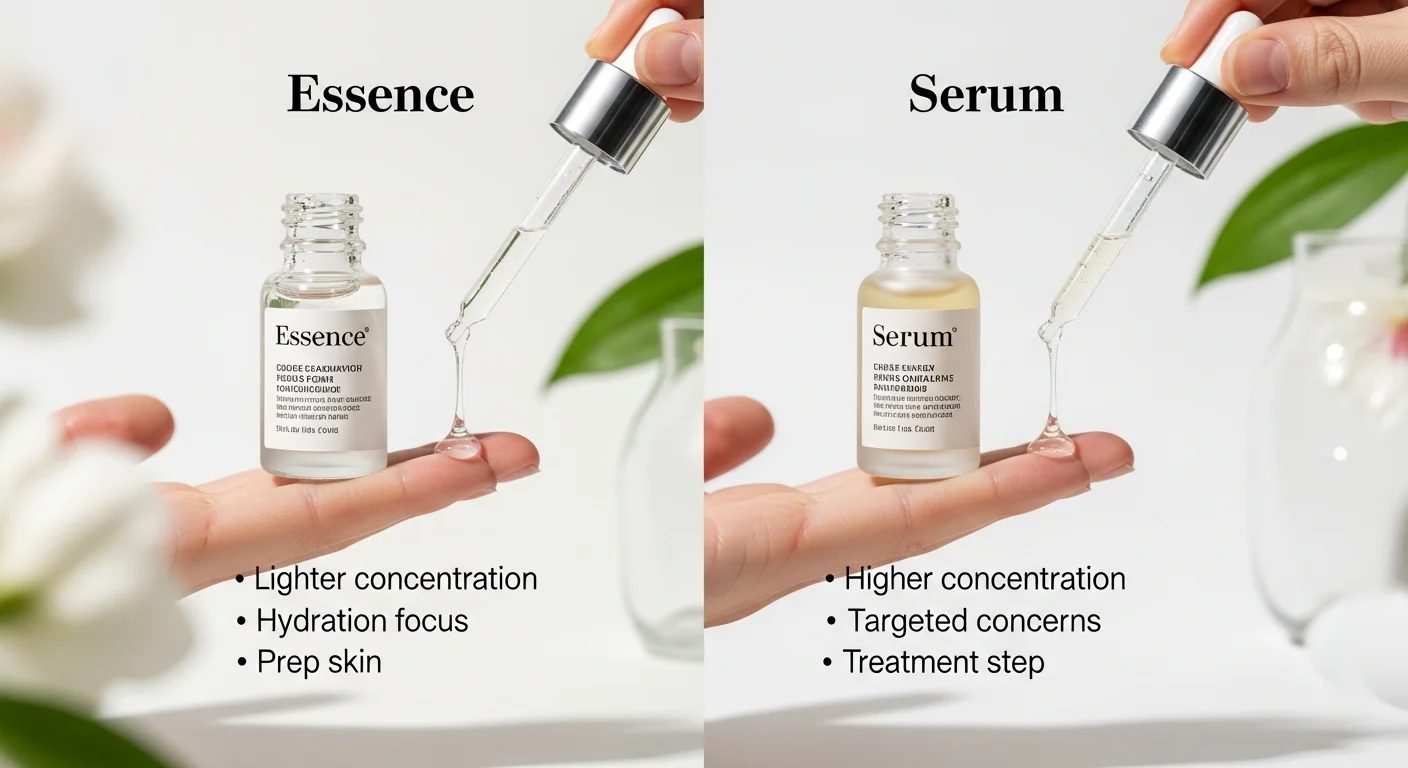
Essence behaves like a gentle helper. It focuses on hydration and skin balance. It prepares the skin and supports other skincare products.
Serum behaves like a treatment product. It works with strong ingredients to solve specific problems such as wrinkles, acne, or dark spots.
Why Is Their Difference Necessary to Know for Learners and Experts?
Knowing the difference between essence and serum helps people build better skincare routines. Many beginners buy random products without understanding their purpose. This leads to wasted money and poor skin results.
For learners, this knowledge improves skincare awareness and vocabulary. For experts such as dermatologists and beauty bloggers, explaining the difference between essence and serum helps guide clients and readers. In society today, skincare knowledge supports self-care, confidence, and healthy living.
Why People Confuse Essence and Serum
Many people think essence and serum are the same. Both look similar and come in small bottles. Their textures also feel light and smooth. Beauty brands sometimes market them in similar ways.
Another reason is the growing skincare market. Different brands create different formulas. Some essences act like serums and some serums feel watery. Because of this overlap, users easily confuse their real roles.
Table Showing Difference and Similarity
| Feature | Essence | Serum | Similarity |
| Purpose | Hydrates and prepares skin | Treats skin issues | Both improve skin |
| Texture | Watery and light | Thicker and concentrated | Both absorb quickly |
| Routine Step | After toner | After essence | Both part of skincare routine |
| Ingredients | Mild ingredients | Strong active ingredients | Both contain skin nutrients |
| Cost | Usually cheaper | Often expensive | Both available in many brands |
Which Is Better in What Situation?
Essence is better when the skin needs hydration and balance. People with dry or tired skin often benefit from essence. It works well in daily routines and helps other products absorb easily. For beginners, essence is a safe and gentle step.
Serum is better when someone has a specific skin concern. If a person wants to reduce wrinkles, acne, or dark spots, serum works better. It contains strong ingredients that target problems directly. Many skincare experts suggest using serum after essence for best results.
How the Words Appear in Metaphors and Similes
🟣 “Her kindness was the essence of true friendship.”
🟣 “The speech captured the essence of freedom.”
🟣 “His idea worked like a serum that healed the team’s problems.”
🟣 “Her advice acted like a serum, fixing the issue quickly.”
Connotative Meaning of the Words
🟣 Essence (positive/neutral): means the pure or most important part.
Example: “Trust is the essence of good leadership.”
🟣 Serum (neutral/positive): suggests healing or scientific treatment.
Example: “Education is the serum that cures ignorance.”
Idioms or Proverbs Related to the Words
🟣 “Essence of time.”
Example: “Speed was the essence of time during the rescue mission.”
🟣 “The essence of something.”
Example: “Teamwork is the essence of success.”
(Serum has very few traditional idioms.)
Works in Literature with These Words
🟣 “The Essence of Christianity” – Theology, Ludwig Feuerbach, 1841
🟣 “The Essence of Buddhism” – Religious philosophy, Various scholars, 20th century
🟣 “The Serum of Truth” – Science fiction theme appearing in many stories
Movies Related to These Words
🟣 “Serum” – Horror/Science fiction film, 2006, USA
🟣 “Essence” – Independent drama film, 2019, USA
Frequently Asked Questions
1. Are essence and serum the same?
No. Essence hydrates the skin, while serum treats specific skin problems.
2. Can I use essence and serum together?
Yes. Many skincare routines use essence first and serum after it.
3. Which comes first in skincare?
Essence comes before serum.
4. Do beginners need serum?
Only if they have specific skin concerns like acne or wrinkles.
5. Is essence necessary?
It is helpful but not always required in a routine.
How Both Help Our Surroundings
Essence and serum promote self-care and healthy living. When people care for their skin, they often feel more confident. This improves social interaction and personal well-being.
Skincare industries also create jobs in research, manufacturing, and beauty services. By understanding products like essence and serum, people make smarter choices and support responsible consumption.
Final Words for the Both
Essence represents hydration and preparation.
Serum represents targeted treatment and repair.
Together, they form a balanced skincare routine.
Conclusion
The difference between essence and serum is simple but important. Essence hydrates the skin and prepares it for other products. Serum treats specific skin concerns with stronger ingredients. Both products work best when used correctly and in the right order.
Understanding the difference between essence and serum helps people choose products wisely. It also prevents confusion in the skincare world. Whether someone is a beginner or an expert, knowing how these two products work can improve daily routines and skin health. When used together properly, essence and serum create a powerful combination for glowing and healthy skin.

Hi! I am Arshad Ullah presently working as linguist in Punjab Education Department. I have done MA in English Literature while M.Phil in Applied Linguistics. I have taught creative writing to the post graduation classes for 15 years. Presently I am working as content writer, and offering classes for blog writing.