One morning, a school principal announced a new rule about phone use in class. The rule was affecting many students because they could not use phones during lessons. At the same time, the principal was effecting a change to improve learning. This small story shows how these words work in real life.
Many learners struggle with the difference between effecting and affecting because the words look and sound similar. However, the difference between effecting and affecting becomes clear when we understand their roles in a sentence.
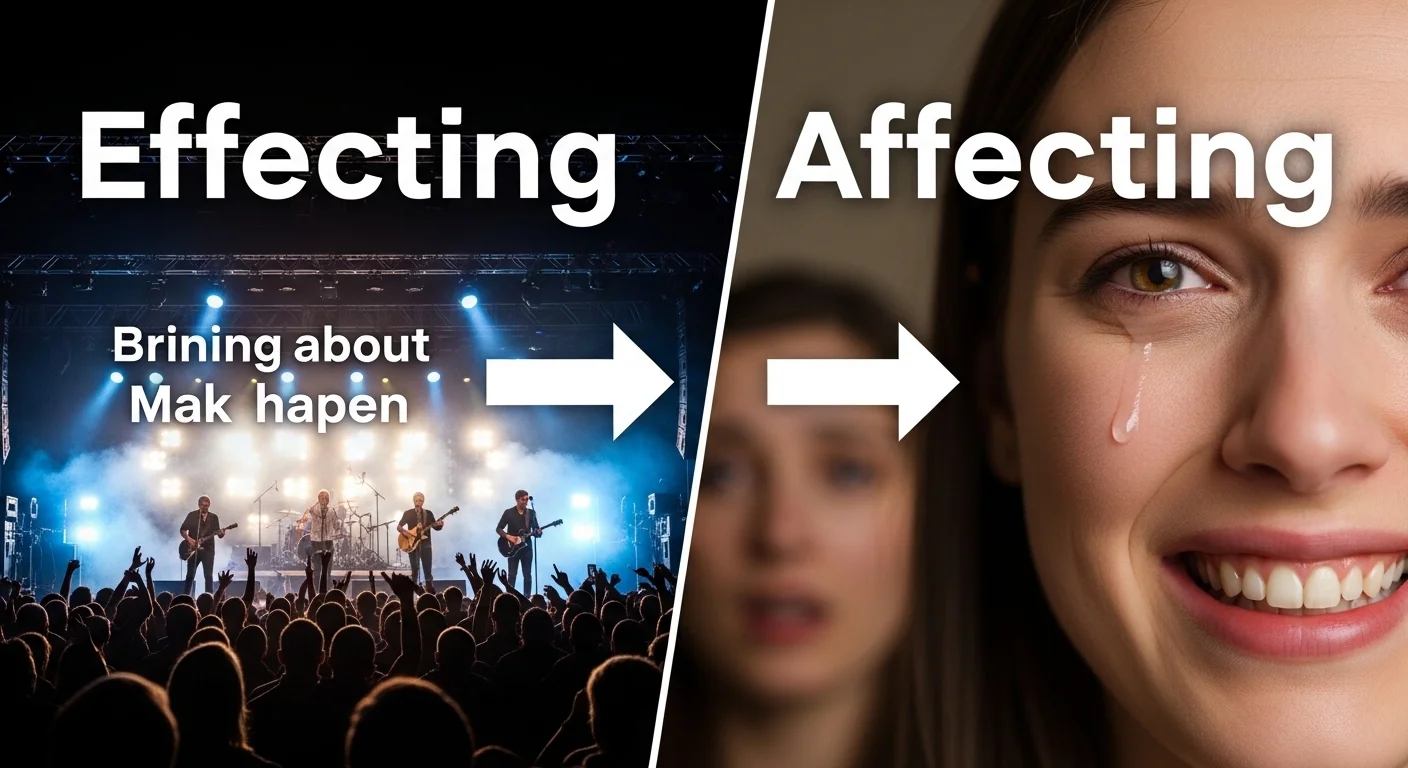
In simple terms, affecting means influencing something, while effecting means bringing something into action.
Key Difference Between the Both
- Affecting means influencing or changing something indirectly.
- Effecting means causing something to happen or making it real.
Why Is Their Difference Necessary to Know for Learners and Experts?
Understanding this difference helps people write clearly and avoid confusion. In education, correct word use improves grammar skills. In professional writing, accurate language builds trust and clarity. Journalists, teachers, and business writers use precise words so readers understand their message easily. When people know the difference between effecting and affecting, they communicate ideas better and avoid misunderstandings in society.
Pronunciation of Both Words
Affecting
- US pronunciation: uh-FEK-ting
- UK pronunciation: uh-FEK-ting
Effecting
- US pronunciation: ih-FEK-ting
- UK pronunciation: ih-FEK-ting
Now that we understand the basics, let us explore the main differences in detail.
10 Differences between Effecting and Affecting
1. Meaning
- Affecting means influencing something.
- Effecting means causing something to happen.
🟣 Example:
The new policy is affecting many workers.
🟣 Example:
The leader is effecting major reforms.
2. Action Type
- Affecting shows indirect change.
- Effecting shows direct creation of change.
🟣 Example:
Bad weather is affecting travel plans.
🟣 Example:
The government is effecting a new transport system.
3. Verb Origin
- Affecting comes from the verb affect.
- Effecting comes from the verb effect.
🟣 Example:
The news is affecting public opinion.
🟣 Example:
The law is effecting social reform.
4. Common Usage
- Affecting appears more in daily speech.
- Effecting appears more in formal writing.
🟣 Example:
Noise is affecting my focus.
🟣 Example:
The committee is effecting change in policy.
5. Context
- Affecting is common in emotional or environmental contexts.
- Effecting is common in official or policy contexts.
🟣 Example:
Stress is affecting his health.
🟣 Example:
The manager is effecting a new workflow.
6. Result Level
- Affecting may or may not produce a final result.
- Effecting produces a clear result.
🟣 Example:
Social media is affecting teenagers.
🟣 Example:
The reform is effecting a better system.
7. Frequency in Writing
- Affecting is used more often.
- Effecting is used less often.
🟣 Example:
Pollution is affecting city life.
🟣 Example:
Leaders are effecting environmental policies.
8. Grammar Role
- Affecting usually describes influence on something.
- Effecting describes bringing something into existence.
🟣 Example:
The change is affecting student behavior.
🟣 Example:
The school is effecting new teaching rules.
9. Tone
- Affecting often appears in emotional or human situations.
- Effecting often appears in technical or formal contexts.
🟣 Example:
The speech was deeply affecting the audience.
🟣 Example:
The team is effecting a new project strategy.
10. Outcome
- Affecting shows influence.
- Effecting shows achievement.
🟣 Example:
Economic changes are affecting families.
🟣 Example:
The policy is effecting real improvement.
Nature and Behaviour of Both
Affecting
This word behaves as a verb form that shows influence. It often appears in everyday conversation. It describes how something changes feelings, situations, or conditions.
Effecting
This word behaves as a formal verb form. It describes bringing something into existence. It often appears in reports, policies, and official announcements.
Why Are People Confused About Their Use?
Many people confuse these words because they look and sound very similar. Both come from related words: affect and effect. When learners see them in writing, they may not know which one shows influence and which one shows creation of change. The similarity in pronunciation also adds to the confusion.
Table Showing Difference and Similarity
| Feature | Affecting | Effecting | Similarity |
| Meaning | Influencing | Causing something to happen | Both are verbs |
| Usage | Common in daily speech | Common in formal writing | Both describe change |
| Action | Indirect influence | Direct action | Both show impact |
| Frequency | Very common | Less common | Both used in English |
| Context | Emotional or social | Policy or technical | Both related to change |
Which Is Better in What Situation?
Affecting is better when talking about influence or impact. For example, people say weather is affecting travel plans or stress is affecting health. This word helps describe situations where something changes another thing indirectly. It is common in daily conversation, news, and casual writing.
Effecting is better when describing the creation of change. It is often used in formal contexts like policies, reforms, and official decisions. For example, a government may be effecting economic reforms. In such cases, the word shows that someone is actively making change happen.
How Are the Keywords Used in Metaphors and Similes?
🟣 Her speech was affecting like a soft rain touching the heart.
🟣 The leader was effecting change like a builder creating a new city.
🟣 The story was affecting like music that moves the soul.
Connotative Meaning of Both Keywords
🟣 Affecting – Neutral or emotional tone
Example: The movie scene was deeply affecting the audience.
🟣 Effecting – Neutral and formal tone
Example: The new rule is effecting positive changes in the school.
Idioms or Proverbs Related to the Words
🟣 “Actions speak louder than words.”
Example: The leader’s actions were effecting real change.
🟣 “Every cloud has a silver lining.”
Example: Hard times affecting people sometimes lead to growth.
Works in Literature Mentioning Related Ideas
🟣 Pride and Prejudice — Novel, Jane Austen, 1813
🟣 1984 — Dystopian fiction, George Orwell, 1949
Movies Related to Change and Influence
🟣 The Social Network — 2010, USA
🟣 Dead Poets Society — 1989, USA
Frequently Asked Questions
1. What is the main difference between effecting and affecting?
Affecting means influencing something. Effecting means making something happen.
2. Which word is more common?
Affecting is more common in daily speech.
3. Is effecting used in formal writing?
Yes, it often appears in official or policy writing.
4. Can both words describe change?
Yes, but affecting shows influence and effecting shows creation of change.
5. Why do learners confuse these words?
They sound similar and come from related words.
How Are Both Useful for Surroundings?
These words help people explain change in the world. Teachers describe how events are affecting students. Leaders explain policies that are effecting improvements in society. Writers use these words to show influence, growth, and progress. Clear language helps communities understand problems and solutions better.
Final Words for Both
Affecting and effecting are close in spelling but different in meaning. One shows influence, while the other shows action that creates change.
Conclusion
The difference between effecting and affecting may seem small, but it is very important in writing. Affecting describes influence or impact, while effecting describes making something happen. Understanding this difference helps writers choose the correct word and communicate clearly. Students, professionals, and everyday writers benefit from learning this rule. When people use the right word, their message becomes more precise and easy to understand. With practice, the confusion disappears, and both words become powerful tools in clear communication.

Hi! I am Arshad Ullah presently working as linguist in Punjab Education Department. I have done MA in English Literature while M.Phil in Applied Linguistics. I have taught creative writing to the post graduation classes for 15 years. Presently I am working as content writer, and offering classes for blog writing.