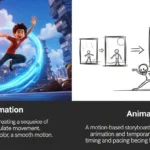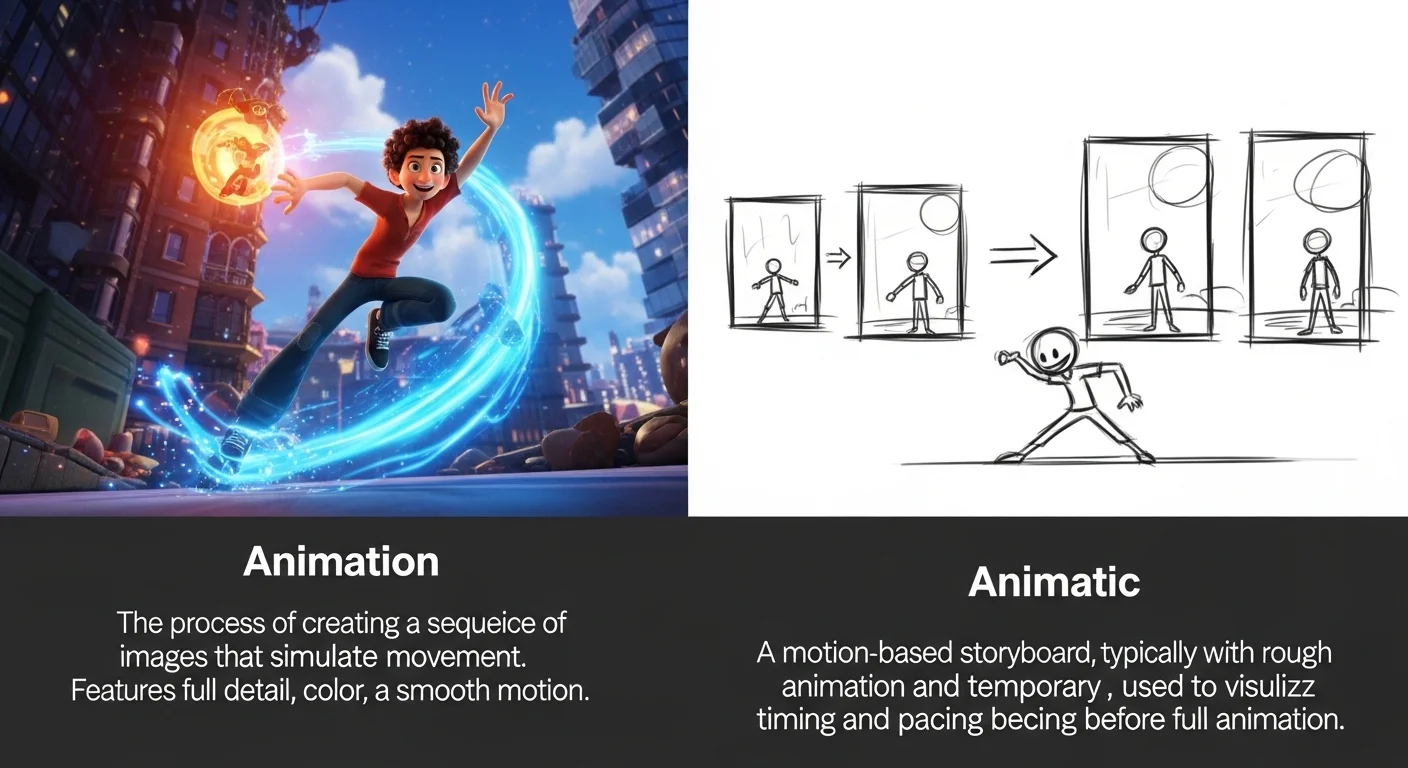
A young artist once showed two videos to a friend. One was smooth and full of life. The other looked rough, like a sketch that moved. The friend asked, “Are these the same?” The artist smiled and said, “No, this is the difference between animation and animatic.” This small moment explains a big idea.
The difference between animation and animatic is easy when you see it, but hard when you only hear the words.
Animation is the final moving story.
An animatic is the early plan of that story.
Knowing the difference between animation and animatic helps both beginners and experts. It saves time and builds better work. In simple words, the difference between animation and animatic is like a finished movie vs. a rough draft.
Key Difference Between the Both
Definition of Animation
Animation is the final, polished moving image.
Definition of Animatic
Animatic is a rough visual plan made before animation.
Why Is Their Difference Necessary to Know for Learners and Experts?
Understanding this helps people learn faster. Students can plan better. Experts can save money and time. In society, media, films, ads, and games all use these steps. So knowing the difference builds strong skills and clear ideas.
Pronunciation
- Animation: US /ˌæn.əˈmeɪ.ʃən/ | UK /ˌæn.ɪˈmeɪ.ʃən/
- Animatic: US /ˌæn.əˈmæt.ɪk/ | UK /ˌæn.ɪˈmæt.ɪk/
Now that you know the basics, let’s move into a deeper look at the difference between animation and animatic.
A List of 10 Differences between Animation and Animatic
1. Stage of Production
- Animation: Final stage
- 🔴 Example 1: A full cartoon episode
- 🔴 Example 2: A finished movie scene
- Sentence: Animation shows the final story.
- Animatic: Early stage
- 🟣 Example 1: Rough storyboard video
- 🟣 Example 2: Timed sketch frames
- Sentence: Animatic shows the plan of the story.
2. Level of Detail
- Animation: High detail
- 🔴 Example 1: Smooth character movement
- 🔴 Example 2: Bright colors and effects
- Sentence: Animation looks clean and rich.
- Animatic: Low detail
- 🟣 Example 1: Simple drawings
- 🟣 Example 2: Black and white sketches
- Sentence: Animatic looks rough and simple.
3. Purpose
- Animation: To show final product
- 🔴 Example 1: Cinema film
- 🔴 Example 2: TV cartoon
- Sentence: Animation entertains viewers.
- Animatic: To plan scenes
- 🟣 Example 1: Story timing test
- 🟣 Example 2: Scene order check
- Sentence: Animatic helps creators plan.
4. Time Required
- Animation: Takes longer
- 🔴 Example 1: Months of work
- 🔴 Example 2: Large team effort
- Sentence: Animation needs more time.
- Animatic: Takes less time
- 🟣 Example 1: Few days work
- 🟣 Example 2: Small team
- Sentence: Animatic is quick to make.
5. Cost
- Animation: Expensive
- 🔴 Example 1: Studio budget
- 🔴 Example 2: Paid artists
- Sentence: Animation costs more money.
- Animatic: Cheap
- 🟣 Example 1: Basic tools
- 🟣 Example 2: Simple sketches
- Sentence: Animatic saves money.
6. Movement Quality
- Animation: Smooth motion
- 🔴 Example 1: Real-like walking
- 🔴 Example 2: Fluid action scenes
- Sentence: Animation feels alive.
- Animatic: Limited motion
- 🟣 Example 1: Still images moving
- 🟣 Example 2: Slide-like frames
- Sentence: Animatic feels basic.
7. Use of Sound
- Animation: Final sound
- 🔴 Example 1: Music and effects
- 🔴 Example 2: Clear voice acting
- Sentence: Animation uses full audio.
- Animatic: Rough sound
- 🟣 Example 1: Temporary voice
- 🟣 Example 2: Basic sound timing
- Sentence: Animatic uses draft audio.
8. Audience
- Animation: Public audience
- 🔴 Example 1: Viewers in cinema
- 🔴 Example 2: Online users
- Sentence: Animation is for everyone.
- Animatic: Internal team
- 🟣 Example 1: Directors
- 🟣 Example 2: Editors
- Sentence: Animatic is for planning teams.
9. Visual Style
- Animation: Polished style
- 🔴 Example 1: 3D graphics
- 🔴 Example 2: Colorful scenes
- Sentence: Animation looks complete.
- Animatic: Sketch style
- 🟣 Example 1: Pencil drawings
- 🟣 Example 2: Storyboard frames
- Sentence: Animatic looks unfinished.
10. Flexibility
- Animation: Hard to change
- 🔴 Example 1: Rework costs more
- 🔴 Example 2: Fixed scenes
- Sentence: Animation is less flexible.
- Animatic: Easy to change
- 🟣 Example 1: Quick edits
- 🟣 Example 2: Scene shifts
- Sentence: Animatic is flexible.
Nature and Behaviour of Both
Animation is expressive, detailed, and final. It behaves like a complete story ready to share.
Animatic is simple, rough, and flexible. It behaves like a guide or draft for future work.
Why Are People Confused About Their Use?
People confuse them because both show moving images. The names sound alike. Also, beginners may see an animatic and think it is unfinished animation.
Table: Difference and Similarity
| Feature | Animation | Animatic | Similarity |
| Stage | Final | Early | Both are part of creation |
| Detail | High | Low | Both use visuals |
| Purpose | Show story | Plan story | Both tell a story |
| Cost | High | Low | Both need tools |
| Audience | Public | Internal | Both guide viewers |
Which Is Better in What Situation?
Animation is better when you want to show a finished story. It is great for films, ads, and public viewing. It creates emotion and strong impact.
Animatic is better for planning. It helps test ideas before spending time and money. It is best for teams who want quick feedback and changes.
How Are the Keywords Used in Metaphors and Similes?
🟣 “Life is like an animatic, always changing.”
🟣 “Her work was smooth like animation.”
🟣 “Ideas start as animatic and grow into animation.”
Connotative Meaning
- Animation: Positive (energy, life)
- Example: “The animation brought joy.”
- Animatic: Neutral (process, planning)
- Example: “The animatic helped improve the idea.”
Idioms or Proverbs
🟣 “Bring to life” (like animation) – Example: The artist brought the story to life.
🟣 “Rough draft first” (like animatic) – Example: Always make a rough draft first.
Works in Literature
🟣 Understanding Animation – Non-fiction, Paul Wells, 1998
🟣 The Animator’s Survival Kit – Guide, Richard Williams, 2001
Movies Related to Keywords
🟣 Toy Story – 1995, USA
🟣 Spider-Man: Into the Spider-Verse – 2018, USA
FAQs
1. What is the main difference?
Animation is final, animatic is a draft.
2. Is animatic necessary?
Yes, it helps plan better.
3. Can animatic become animation?
Yes, it is the first step.
4. Which is faster to make?
Animatic is faster.
5. Do both use sound?
Yes, but animatic uses basic sound.
How Are Both Useful for Surroundings?
Both help media, films, and ads. Animation entertains people. Animatic helps teams work better. Together, they improve creative industries and learning spaces.
Final Words for Both
Animation shows the final dream. Animatic builds the path to that dream. Both are important.
Conclusion
The difference between animation and animatic is simple but very useful. Animation is the final product that people enjoy. Animatic is the early step that helps build that product. Both play key roles in creative work. When you understand their difference, you can plan better and create stronger results. Whether you are a learner or a professional, this knowledge saves time and effort. In today’s world of media, knowing the difference between animation and animatic is a smart and helpful skill.

Hi! I am Arshad Ullah presently working as linguist in Punjab Education Department. I have done MA in English Literature while M.Phil in Applied Linguistics. I have taught creative writing to the post graduation classes for 15 years. Presently I am working as content writer, and offering classes for blog writing.